Genital Herpes: Diagnosis, Treatment and Transmission

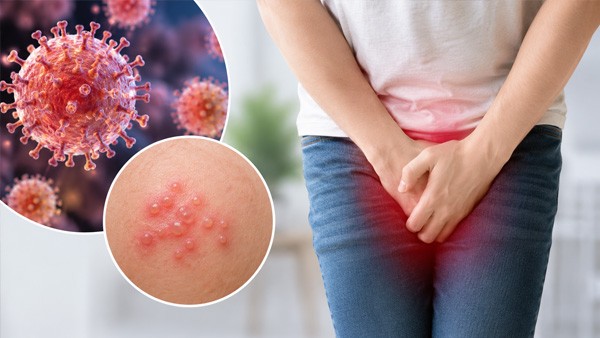

Genital herpes is a manageable condition that most people find much harder to hear about than to live with. The physical illness after the first episode is usually mild and intermittent. The distress that follows the diagnosis is frequently out of proportion to it, and much of that distress comes from misinformation — inflated prevalence figures, imagined transmission routes, and the belief that it makes someone permanently and unavoidably infectious.
This guide covers what the virus actually does, how it is properly diagnosed, how much transmission risk can be reduced, what happens in pregnancy, and where the widely repeated claims about it are simply wrong.
🧠 Correcting a figure that appears everywhere: the frequently cited claim that seventy to ninety per cent of people carry the herpes virus refers to HSV-1, the type that mostly causes cold sores around the mouth, and is a global oral seroprevalence figure. Genital infection with HSV-2 affects roughly one in eight people aged fifteen to forty-nine worldwide. Those are very different numbers describing very different things, and conflating them makes a common condition sound universal.
🧬 Two viruses, one condition
Genital herpes is caused by herpes simplex virus, of which there are two types, and which type someone has matters considerably more than most people are told.
| HSV-1 | HSV-2 | |
|---|---|---|
| Traditional site | Mouth and lips | Genital |
| Genital infection | Increasingly common, usually acquired through oral sex | The classic cause |
| Recurrence rate when genital | Low — often one episode or a few, then rarely | Higher — several episodes a year initially, declining over time |
| Asymptomatic shedding | Much less frequent | More frequent |
| Transmission risk to a partner | Considerably lower | Higher |
In many high-income countries HSV-1 now accounts for a large share of first-episode genital herpes, particularly in younger people, because fewer children acquire oral HSV-1 early in life and therefore reach adulthood without antibodies. That shift is good news for anyone diagnosed: genital HSV-1 recurs far less often and transmits far less readily than HSV-2. Knowing which type you have changes what to expect, which is why type-specific testing is worth insisting on.
🔬 What the virus does
After the first infection, herpes simplex travels along sensory nerves to a cluster of nerve cell bodies near the base of the spine and remains there permanently in a dormant state. It is not being fought off, and it is not being cleared — it is inactive, invisible to the immune system, and beyond the reach of any current treatment.
Periodically it reactivates, travels back down the nerve to the skin, and either produces a visible outbreak or is shed without any lesion at all. That second phenomenon — asymptomatic shedding — is the key to understanding transmission, and it explains why most people acquire genital herpes from a partner who had no symptoms and often did not know they were infected.
Shedding is most frequent in the first year after infection and declines over subsequent years, as do outbreaks. The natural trajectory of this condition is toward less, not more.
🌡️ What it looks like
The first episode is usually the worst, and in people who have never had any herpes infection before it can be genuinely unpleasant: multiple painful blisters and ulcers, swollen tender glands in the groin, fever, headache, aching, and sometimes pain on urination severe enough to cause retention. It typically lasts two to four weeks untreated.
Many first episodes are far milder than that, and a substantial proportion of people have no recognised first episode at all — which is why so many find out years later, and why establishing when infection occurred is usually impossible.
Recurrences are much shorter and milder, typically lasting five to ten days and often preceded by a warning sensation of tingling, itching or nerve pain in the area, the buttock or the thigh. Many people learn to recognise this reliably, which matters because treatment started at that point works considerably better.
Frequency varies widely. Some people have several episodes a year; many have one or two; a large group has none after the first. Episodes become less frequent with time in the great majority of cases.
🧪 Getting a proper diagnosis
This section matters because incorrect testing is common and the consequences are real.
Where there is a lesion, a swab tested by PCR is the best method. It confirms herpes, identifies the type, and is far more sensitive than the older viral culture. Swab an ulcer early rather than waiting, since sensitivity falls as it heals.
Where there is no lesion, type-specific blood testing detects antibodies to HSV-1 and HSV-2 separately. It shows past exposure rather than where the infection is, which is why interpretation needs care.
🔴 Two testing errors to avoid. First, IgM testing for herpes is unreliable and is recommended against by professional bodies — it does not distinguish new from old infection and produces false positives that cause enormous distress. Second, older non-type-specific antibody tests cannot separate HSV-1 from HSV-2, which makes their results close to useless. If blood testing is done, it must be a type-specific IgG assay. Antibodies also take weeks to develop, so a negative test soon after exposure does not exclude recent infection.
Routine herpes serology is not part of standard sexual health screening in most guidelines, and there is a reason: a positive result in someone with no symptoms creates considerable psychological burden without changing management for many people. It is appropriate where symptoms suggest herpes but swabs are negative, where a partner has genital herpes, and in some pregnancy situations.
💊 Treatment
Antiviral drugs do not eliminate the virus — nothing does — but they suppress its replication effectively, and they work in two distinct ways depending on what the person needs.
| Episodic treatment | Suppressive treatment | |
|---|---|---|
| How it is taken | A short course at the first sign of an outbreak | Every day, continuously |
| What it achieves | Shortens the episode by one to two days and reduces severity | Reduces outbreak frequency by around seventy to eighty per cent; many people have none at all |
| Best for | Infrequent outbreaks with reliable warning symptoms | Frequent or severe outbreaks, or where transmission to a partner is the concern |
| Timing | Must start within the first day, ideally at the warning sensation | Continuous, reviewed periodically |
Three antivirals are used and all are effective. Valacyclovir converts to acyclovir in the body but absorbs far better, so it can be taken once or twice daily rather than five times — which is why it has largely displaced plain acyclovir for this condition. Famciclovir is similar. Acyclovir itself remains effective and is the cheapest, at the cost of frequent dosing.
For the first episode, treatment is started as soon as possible and given for seven to ten days, since it makes a substantial difference to a genuinely unpleasant illness.
Suppressive therapy is usually reviewed after a year or so, because outbreak frequency declines naturally and many people find they no longer need it. It is safe for long-term use, with a good record over decades.
✅ The specific reason valacyclovir matters for transmission: it is the antiviral with published trial evidence that daily suppressive therapy reduces transmission of genital herpes to an uninfected partner. A large randomised study of discordant couples found substantially fewer transmissions in the group taking daily valacyclovir. That makes suppressive therapy a genuine option for couples where one partner has herpes and the other does not, rather than only a treatment for outbreaks.
🤝 Transmission, in realistic terms
Understanding actual risk replaces a great deal of anxiety with something manageable.
Transmission happens through direct skin-to-skin contact with an area where the virus is present, which may or may not have a visible lesion. It requires intimate contact. Over the course of a year in a couple where one partner has HSV-2 and the other does not, and no precautions are taken, transmission occurs in a minority of couples rather than being inevitable — and every measure below reduces it further.
| Measure | Effect |
|---|---|
| Avoiding sex during outbreaks and warning symptoms | Removes the highest-risk periods |
| Consistent condom use | Reduces risk substantially, though it does not cover all affected skin |
| Daily suppressive antiviral therapy | Reduces transmission meaningfully; the effect is documented in trial evidence |
| All three combined | Reduces risk to a low level over years |
| Knowing the type | Genital HSV-1 transmits considerably less than HSV-2 |
| Partner already has the same type | No further risk to acquire what they already have |
Many long-term couples live with one partner infected and the other not, without transmission, for years. That is the realistic picture rather than an optimistic one.
🗣️ Telling a partner
For most people this is harder than any symptom, and it is worth addressing directly rather than leaving as an unmentioned problem.
Timing. Before sexual contact, in a calm moment rather than in bed. There is no version of this conversation that improves by being delayed until afterwards.
Framing. Presenting it as a manageable skin condition caused by a very common virus, with a clear plan for reducing risk, produces a different response than presenting it as a confession. The information itself is reassuring — it is common, treatable, risk can be substantially reduced, and it does not affect fertility or long-term health.
Expectations. Most people react far better than anticipated. Many will disclose something themselves. Some will need time to read about it. A partner who reacts with rejection is telling you something useful about them.
The emotional side is legitimate. Studies of people newly diagnosed find genuine distress, shame and anxiety about future relationships, usually most intense in the first months and settling substantially over the following year. Talking to a clinician who knows the field, or to a support organisation, helps considerably more than reading forums, where the most distressed voices are naturally the loudest.
🤰 Pregnancy
Neonatal herpes is rare and serious, and the risk pattern is the opposite of what most people assume.
The highest risk is a woman acquiring herpes for the first time late in pregnancy, particularly in the third trimester, because she has not yet developed antibodies to pass to the baby and viral shedding is heaviest in early infection. In that situation the risk of transmission during vaginal delivery is substantial, and caesarean section is usually recommended.
A woman with established genital herpes from before pregnancy has a very low risk, because her antibodies cross the placenta and protect the baby. Recurrences during pregnancy do not carry the same danger, and vaginal delivery is generally appropriate provided there is no active lesion at the time.
Practical points that follow:
- Suppressive antiviral therapy from around thirty-six weeks reduces outbreaks at delivery and the need for caesarean section in women with recurrent herpes
- A woman without herpes whose partner has it should take particular care in the third trimester, including condoms and abstaining from sex if the partner has an outbreak, and avoiding oral sex if the partner gets cold sores
- Tell the maternity team about a herpes history, including a partner history, so the pregnancy is managed appropriately
- Antivirals used in pregnancy have a long safety record
❌ Myths worth dismantling
You cannot catch genital herpes from toilet seats, towels, swimming pools or shared bedding. The virus is fragile outside the body and dies rapidly on surfaces. It requires direct skin-to-skin contact. The claim that it spreads through household items appears in a great deal of older writing and causes entirely unnecessary fear within families.
Having herpes does not mean being contagious all the time. Shedding occurs on a minority of days, decreasing over the years, and is reduced further by suppressive therapy.
It does not affect fertility, and it does not cause cancer. Cervical cancer is caused by human papillomavirus, an entirely different virus, and the two are frequently confused.
Cold sores and genital herpes are the same family of virus, which means oral sex during a cold sore can transmit HSV-1 to the genitals. This is now a leading route of genital herpes acquisition and is widely unappreciated.
No supplement, diet or alternative therapy cures herpes. Products claiming to eliminate the virus are selling something that does not exist, and they are marketed aggressively to precisely the people most vulnerable to that promise. Lysine has been studied with unimpressive results.
🧘 Living with it
Beyond medication, several things help.
Identify triggers. Common ones include illness and fever, physical exhaustion, significant stress, friction from sex, menstruation, and ultraviolet exposure. Recognising a personal pattern makes outbreaks predictable rather than random.
Manage a current outbreak simply. Keep the area clean and dry, wear loose cotton clothing, use salt water bathing for comfort, take pain relief, and urinate in a warm bath or while pouring water if urination is painful.
Start treatment at the warning sensation rather than after blisters form. This is the single practical change that most improves episodic treatment, and it means keeping a supply available rather than seeking a prescription each time.
Review suppressive therapy periodically. After a year, many people find their outbreak frequency has fallen enough that they no longer need daily medication.
Expect improvement. The natural course is toward fewer and milder episodes. The first year is usually the most active, and both outbreaks and shedding decline over subsequent years.
Antiviral treatment for genital herpes is stocked in the antiviral category, including Valtrex (valacyclovir), which is used both episodically and as daily suppressive therapy. Which approach suits depends on outbreak frequency and on whether reducing transmission to a partner is a goal.
❓ Frequently asked questions
How common is genital herpes really?
Genital infection with HSV-2 affects roughly one in eight people aged fifteen to forty-nine worldwide. The much-quoted figure of seventy to ninety per cent refers to HSV-1, the type that mostly causes cold sores, and is a global oral seroprevalence number. Conflating the two makes a common condition sound universal and adds to the distress of diagnosis without any factual basis.
Can genital herpes be cured?
No. After the first infection the virus remains permanently dormant in nerve cells near the base of the spine, where no current treatment can reach it. Antiviral drugs suppress its replication very effectively, shortening outbreaks, preventing most of them with daily therapy, and reducing transmission. Products claiming to eliminate the virus are selling something that does not exist.
Does it matter which type I have?
Considerably. Genital HSV-1, usually acquired through oral sex, recurs far less often than HSV-2 — frequently just once or a handful of times — sheds less and transmits less readily. Genital HSV-2 typically causes more episodes initially, declining over the years. Knowing the type changes what to expect and what to tell a partner, which is why type-specific testing is worth insisting on.
Which test should I have?
If there is a lesion, a swab tested by PCR — it confirms herpes, identifies the type and is far more sensitive than culture. Swab early rather than after healing begins. Without a lesion, a type-specific IgG blood test. Avoid IgM testing entirely: professional bodies recommend against it because it does not distinguish new from old infection and produces false positives that cause real distress.
Can I catch it from a toilet seat or towel?
No. The virus is fragile outside the body and dies rapidly on surfaces, and transmission requires direct skin-to-skin contact. The claim that it spreads through toilet seats, towels, swimming pools or shared bedding appears in a great deal of older writing and causes entirely unnecessary fear within families. It is not a route of transmission.
What is the difference between episodic and suppressive treatment?
Episodic means a short course taken at the first sign of an outbreak, shortening it by a day or two — it works best started at the warning tingle rather than after blisters appear. Suppressive means taking an antiviral every day, which reduces outbreak frequency by around seventy to eighty per cent and eliminates them entirely for many people. Suppressive therapy also reduces transmission to a partner.
How much can I reduce the risk to my partner?
Substantially. Avoiding sex during outbreaks and warning symptoms removes the highest-risk periods. Consistent condom use reduces risk further, though it does not cover all affected skin. Daily suppressive antiviral therapy adds a documented reduction on top of both. Combined, these bring risk to a low level, and many couples where one partner has herpes live for years without transmission.
Why did I catch it from someone with no symptoms?
Because of asymptomatic shedding — the virus periodically reactivates and reaches the skin surface without producing any visible lesion. Most genital herpes is acquired this way, from a partner who had no symptoms and frequently did not know they were infected. Shedding is most frequent in the first year after infection and declines over subsequent years, and suppressive therapy reduces it considerably.
Is it dangerous in pregnancy?
The risk pattern is the opposite of what most people assume. A woman with established genital herpes from before pregnancy has a very low risk, because her antibodies cross the placenta and protect the baby, and vaginal delivery is generally fine without an active lesion. The high-risk situation is acquiring herpes for the first time late in pregnancy, where caesarean section is usually recommended.
Can oral sex transmit herpes to the genitals?
Yes, and this is now a leading route of genital herpes acquisition in many countries. Someone with a cold sore can transmit HSV-1 to a partner genitals through oral sex. The resulting genital HSV-1 infection recurs and transmits considerably less than HSV-2, which is a genuine consolation, but the transmission route itself is widely unappreciated and worth knowing about.
Will outbreaks continue at this rate forever?
Almost certainly not. The natural course is toward fewer and milder episodes. The first year after infection is usually the most active for both outbreaks and shedding, and both decline substantially over subsequent years. Many people who start suppressive therapy find after a year that their frequency has dropped enough to stop, which is why it is reviewed periodically rather than continued indefinitely by default.
How do I tell a new partner?
Before sexual contact, in a calm moment rather than in bed, and framed as a manageable skin condition caused by a very common virus with a clear plan for reducing risk. The facts themselves are reassuring — it is common, treatable, risk can be substantially reduced, and it does not affect fertility or long-term health. Most people react far better than anticipated, and many disclose something of their own.
📑 Sources and editorial
- CDC Sexually Transmitted Infections Treatment Guidelines — genital herpes
- British Association for Sexual Health and HIV guideline for the management of anogenital herpes
- WHO estimates of global herpes simplex virus prevalence
- Corey L et al. — randomised trial of once-daily valacyclovir to reduce transmission of genital herpes
- Professional guidance against the use of HSV IgM serology
- RCOG and ACOG guidance on genital herpes in pregnancy and prevention of neonatal herpes
- FDA prescribing information for valacyclovir, acyclovir and famciclovir
- Related products: antiviral category
- RXshop Editorial Team — reviewed by Emily Chen, MD, MPH, Internal Medicine
Medical Disclaimer: The information in this article is for educational and informational purposes only and is not a substitute for professional medical advice, diagnosis, or treatment. Always seek guidance from a qualified healthcare provider with any questions you may have regarding a medical condition, and before starting, stopping or changing any medication.