Buy Propecia Finasteride Online for Male Pattern Baldness Androgenetic Alopecia Hair Loss Treatment Original Merck Brand

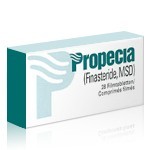
Propecia (Finasteride 1mg) stands as the original FDA-approved brand-name medication for treating male pattern hair loss — developed by Merck & Co. and approved December 1997. As the reference compound for the entire 5-alpha-reductase inhibitor drug class, Propecia established the gold standard against which all generic finasteride products are tested for bioequivalence. The 1 mg once-daily oral tablets manufactured under strict US/EU pharmaceutical standards deliver decades-proven therapeutic outcomes used in landmark clinical trials still referenced in dermatology guidelines today.
Finasteride in Propecia works through selective Type II 5-alpha-reductase inhibition — competitively blocking the enzyme converting testosterone into dihydrotestosterone (DHT) in scalp follicles and prostate tissue. DHT drives progressive miniaturization of genetically susceptible scalp follicles in androgenetic alopecia. By blocking approximately 70% of DHT production with daily 1 mg dosing, Propecia halts miniaturization at the hormonal root cause. Documented in Merck's landmark 5-year trials: hair loss stops in 90% of treated men, visible hair regrowth in 65% at 2 years, hair density gains on vertex and frontal scalp, and existing thinning hairs thicken.
Propecia serves the FDA-approved indication of male pattern hair loss in men ages 18-41 with frontal-parietal or crown thinning. The medication treats early to moderate androgenetic alopecia most effectively — particularly Norwood stage II-V baldness, receding hairline, vertex thinning, and diffuse frontal-parietal thinning. Propecia is frequently combined with topical minoxidil for synergistic effects, used as post-hair-transplant therapy to preserve grafts and remaining native hair, and serves as long-term maintenance therapy for hair density preservation.
Propecia offers convenient once-daily oral dosing taken at any consistent time with or without food. The medication reaches peak blood concentrations within 1-2 hours and shows 6-8 hour half-life with hepatic CYP3A4 metabolism. Hair-related benefits become noticeable at 3-6 months with maximum response at 12-24 months. Merck manufactures Propecia under US FDA cGMP and equivalent EU standards at audited facilities — delivering the original brand quality assurance that established this medication's clinical reputation.
Free prescription
Discrete packaging
Have questions?
Quality Assurance
- Male Pattern Hair Loss: Characteristic frontal-parietal and crown hair thinning pattern in genetically susceptible men;
- Androgenetic Alopecia: Medical term for hereditary hair loss driven by androgen-sensitive follicle miniaturization;
- Male Pattern Baldness: Common name for genetic hair loss following typical Norwood progression pattern;
- Receding Hairline: Frontal hairline recession from androgenetic hair loss responding to DHT reduction;
- Crown Hair Thinning: Vertex hair density loss characteristic of male pattern baldness responding to finasteride;
- Vertex Baldness: Top-of-head hair thinning improving with consistent 5-alpha-reductase blockade;
- Frontal Hair Loss: Front scalp hair loss benefiting from DHT reduction at the hormonal source;
- Early Stage Hair Loss: Initial hair loss with active miniaturization most responsive to treatment intervention;
- DHT Related Hair Loss: Hair loss driven by dihydrotestosterone sensitivity in genetically vulnerable follicles;
- Hair Regrowth: Restoration of follicle activity producing visible new hair growth in previously thinning areas;
- Hair Density Improvement: Increased hair count per square centimeter through halted miniaturization and regrowth;
- Norwood Stage Hair Loss: Classification system for male pattern baldness stages most responsive at early Norwood stages;
- Diffuse Hair Thinning: Generalized frontal-parietal scalp thinning pattern responding to DHT suppression;
- Hair Loss Prevention: Preventive use in men with strong family history before significant hair loss occurs;
- Hair Transplant Adjunct: Adjunctive therapy after hair transplant surgery to preserve transplanted and existing native hair;
- Minoxidil Combination Therapy: Combined with topical minoxidil for synergistic hair loss treatment outcomes;
- Brand Name Reference Therapy: Original FDA-approved finasteride formulation used in landmark clinical trials;
- 5 Alpha Reductase Inhibition: Drug class blocking DHT production for hair loss and BPH treatment;
- Benign Prostatic Hyperplasia: At 5 mg dose treats enlarged prostate (Proscar formulation by same Merck).
- Better Hair Regrowth: Visible new hair growth occurs in 65% of patients at 2 years with continued improvement over time;
- Less Dihydrotestosterone: Scalp and serum DHT levels drop approximately 70% from baseline with daily dosing;
- Better Crown Coverage: Vertex hair density improves substantially as crown follicles return to terminal growth;
- Better Frontal Hair Coverage: Forehead and frontal hair density increases through halted miniaturization process;
- Less Hairline Recession: Progressive frontal hairline recession stops with consistent DHT suppression;
- Better Hair Thickness: Existing thinning hairs thicken as follicles return to fuller terminal hair production;
- Better Hair Density: Hair count per square centimeter increases through stopped loss and active regrowth;
- Less Follicle Miniaturization: Progressive follicle shrinkage process halts at the hormonal source through DHT reduction;
- Better Hair Quality: Hair caliber thickness and pigmentation improve as follicles regain healthy production;
- Less Daily Hair Shedding: Daily hair fall returns to normal physiological levels from excessive androgenetic shedding;
- Better Self Confidence: Restored hair appearance improves self-image and confidence in social and professional settings;
- Better Brand Name Quality Assurance: Original Merck manufacturing under strict US FDA and EU pharmaceutical standards;
- Better Clinical Trial Reference Data: All efficacy claims trace to Merck landmark studies conducted with this exact formulation;
- Better Minoxidil Synergy: Combination with topical minoxidil produces superior results versus either monotherapy alone;
- Better Hair Transplant Outcomes: Adjunctive use after transplant preserves both grafts and surrounding native hair;
- Better Long Term Maintenance: Hair density maintained over years of consistent therapy preventing further loss;
- Less Hair Loss Anxiety: Knowing hair loss is actively controlled reduces psychological distress about appearance;
- Once Daily Oral Convenience: Single daily tablet at any consistent time fits any routine without timing restrictions;
- Better Quality of Life: Daily wellbeing improves dramatically as hair loss anxiety resolves and self-confidence returns.
Generic Propecia (Finasteride 1 mg) Medication guide:
📌 What Propecia Is and the Merck Original Brand
Propecia is the original Merck brand of finasteride 1 mg for male pattern hair loss. FDA-approved in 1997. The reference drug against which every generic finasteride is still measured.
📌 Three anchor facts:
- 🏬 Made by Merck — the original manufacturer, continuous production since 1997
- 💊 1 mg oral tablet once daily — a tenth of the Proscar BPH dose
- 🎯 DHT blocker — stops the hormone that shrinks follicles
Finasteride blocks the enzyme 5-alpha reductase type II, which converts testosterone to dihydrotestosterone (DHT). DHT is the hormone that drives follicle miniaturization in male pattern baldness. Lower DHT means slower miniaturization and partial recovery of affected follicles.
| Property | Propecia |
|---|---|
| Active ingredient | Finasteride 1 mg |
| Manufacturer | Merck & Co. (US); Organon (international) |
| Drug class | 5-alpha reductase type II inhibitor |
| Dosing | 1 mg orally once daily |
| Approved indication | Male pattern hair loss (18-41 originally) |
| FDA approval year | 1997 |
🎯 What Propecia actually does: lowers scalp DHT by 60-70%, halts further follicle miniaturization, and produces modest regrowth in follicles that still have viable papillae. It stops the attack — it does not actively regrow hair the way minoxidil does.
⏰ Response timeline:
- 📅 Month 1-3 — DHT levels drop; no visible hair change
- 📈 Month 3-6 — shedding stabilizes; some early thickening
- 🌟 Month 6-12 — visible improvement, especially crown
- 📈 Year 2-10+ — sustained benefit with continued use
- 🔄 Stopping — DHT returns to baseline in weeks; hair loss resumes
⚠️ The commitment: Propecia is lifelong therapy. Stopping allows DHT to recover and miniaturization to resume. The hair gained during treatment fades over 6-12 months after discontinuation.
🧔 Propecia for Male Pattern Baldness Primary Indication
Male pattern baldness is the primary indication for Propecia and the only one FDA-approved. Half of men by age fifty. Up to eighty percent by seventy. The pattern itself is a clue: temples first, crown next, horseshoe fringe at the end.
The driver is DHT shrinking genetically susceptible follicles over years. Propecia blocks the enzyme producing DHT. Follicles stop miniaturizing.
🎯 Where Propecia works best:
- 👑 Vertex (crown) — FDA-studied area, strongest response
- 🔄 Mid-scalp thinning — excellent response
- 🟡 Frontal hairline — modest response, often partial recovery
- 🚫 Fully bald scalp — no response, follicles already gone
| Norwood stage | What to expect from Propecia |
|---|---|
| II-III (early) | Excellent stabilization; often full hairline preservation |
| III vertex to IV (moderate) | Good stabilization; add minoxidil for regrowth |
| V (advanced) | Halts progression; preserves remaining hair |
| VI-VII (extensive) | Protects donor zone; transplant primary |
💡 The earlier, the better. Men who start Propecia at Norwood II or III keep more hair at sixty than men who wait until Norwood V. The window to protect miniaturizing follicles narrows every year.
📊 The Johnson Finasteride Trial (JFT 1998) established the response pattern used today:
- 🟢 83% of men stabilized or improved at 2 years
- 🟢 66% showed visible regrowth by investigator assessment
- 📉 Only 17% continued to lose hair despite treatment
- 🔄 Placebo arm: 72% continued to lose hair over 2 years
🏆 Combination therapy is the modern standard. Propecia + minoxidil delivers 94% response rate vs 80% Propecia alone vs 59% minoxidil alone. One drug blocks the attack, the other rebuilds the follicle. Together they fix cause and consequence.
🎯 The decision to start Propecia is a decision about long-term maintenance. Men who commit to indefinite use and accept the side effect profile typically retain significantly more hair into older age than men who do not.
👨⚕️ Propecia Discovery From Proscar to Dedicated Hair Drug
The Propecia story is one of accidental discovery — or more precisely, a careful observation that transformed a prostate medication into the first dedicated hair loss drug for men.
Merck originally developed finasteride at 5 mg daily as Proscar, approved by the FDA in 1992 for benign prostatic hyperplasia (enlarged prostate). The drug worked by blocking the conversion of testosterone to DHT, shrinking the prostate.
📅 Finasteride development timeline
- 🧪 1980s — Merck synthesizes finasteride during androgen pathway research
- 💊 1992 — FDA approves Proscar 5 mg daily for BPH
- 🤔 1992-1996 — investigators notice hair regrowth in Proscar users
- 🔬 1993-1997 — dose-finding studies for hair loss indication
- 🌟 1997 — FDA approves Propecia 1 mg daily for male AGA
- 🌍 1998 — Johnson/Kaufman trials published; worldwide adoption begins
- 🛡️ 2003 — PCPT shows prostate cancer prevention
- 🏁 2013 — Propecia patent expires; generic finasteride floods market
🤔 The key discovery: men taking Proscar for enlarged prostates were growing hair as a side effect. Merck investigated whether a lower dose could produce the hair effect without the prostate effect.
📊 What dose-finding studies showed:
- 💊 1 mg daily lowered scalp DHT by 60-70% — enough for hair growth
- 💊 5 mg daily was overkill for hair, needed for BPH
- 💊 0.2 mg daily — too low, inconsistent response
- 💊 1 mg hit the sweet spot — adopted as the Propecia dose
| Product | Dose | Indication |
|---|---|---|
| Proscar | 5 mg daily | Benign prostatic hyperplasia |
| Propecia | 1 mg daily | Male pattern hair loss |
💡 Some men still split Proscar 5 mg tablets into quarters to approximate 1.25 mg daily, saving money versus Propecia. This is off-label but common in cost-conscious practice. The finasteride molecule is identical in both products.
The parallel discovery of hair growth from an antihypertensive (minoxidil, approved as Rogaine in 1988) and from a prostate drug (finasteride, approved as Propecia in 1997) defined the modern medical era of hair loss treatment. Both drugs remain the only two FDA-approved medications for male pattern baldness nearly three decades later.
⚖️ Propecia vs Generic Finasteride Clinical Equivalence
The Propecia patent expired in 2013, opening the market to generic finasteride manufacturers worldwide. Today most finasteride prescriptions are filled with generics costing a fraction of the Merck original.
Clinically, they are the same drug. Chemically, structurally, pharmacologically identical. The differences are branding, pricing, and regulatory origin.
| Factor | Propecia | Generic finasteride |
|---|---|---|
| Active ingredient | Finasteride 1 mg | Finasteride 1 mg (identical) |
| Manufacturer | Merck / Organon | Multiple (Teva, Dr Reddy, Cipla, etc.) |
| Approval basis | Original NDA with pivotal trials | Bioequivalence to Propecia |
| Clinical equivalence | Reference | Equivalent (FDA-verified) |
| Common brands | Propecia | Finax, Finpecia, Healpecia, Fincar |
| Cost | 🔴 Higher (branded premium) | 🟢 Lower (generic pricing) |
🎯 At the molecular level, they are the same drug. Both deliver 1 mg finasteride. Both block the same enzyme. Both lower DHT by the same percentage. Response rates, side effects, and timelines are identical.
💡 Why some men prefer Propecia:
- 🏬 Brand recognition — 25+ years of consumer awareness
- 🔐 Manufacturer trust — Merck quality reputation
- 📑 Original trials — the drug tested in the pivotal studies
- 🏷️ Consistency — same manufacturer throughout treatment
- 🤝 Prescriber comfort — some clinicians default to brand
💰 Why generic finasteride dominates by prescription volume:
- 🟢 Lower monthly cost — often 70-90% less than branded
- 🌍 Wider availability — shipped internationally by many manufacturers
- ✅ Same clinical response — no advantage lost
- 📅 Long-term affordability — critical for indefinite therapy
| Scenario | Reasonable choice |
|---|---|
| Cost not a factor; want brand assurance | Propecia |
| Long-term use, budget-conscious | Generic from reputable manufacturer |
| Prior good response on Propecia | Either; stay with what works |
| New user without preference | Either acceptable; prescriber choice |
Clients switching between Propecia and generic finasteride do not need any medication adjustment. Same 1 mg dose, same timing, same expectations. The brand name is cosmetic.
👩 Propecia and Female Pattern Hair Loss Off-Label
Propecia is not FDA-approved for women. Women of childbearing potential should not take finasteride at any dose because of the Category X pregnancy risk — it can cause genital malformation in a male fetus.
Off-label use in post-menopausal women at higher doses (2.5-5 mg daily) has emerged as a specialist option when spironolactone is contraindicated or insufficient.
🛑 Absolute rules for women and Propecia:
- ❌ Pregnant women must not take any finasteride dose
- ❌ Pregnant women must not handle broken or crushed tablets
- ❌ Women of childbearing potential generally avoid finasteride entirely
- ⚠️ Male fetus risk — genital development interference first trimester
👩 Where off-label finasteride fits in female hair loss:
- 👴 Post-menopausal FPHL with hormonal contribution
- 🔄 Spironolactone intolerance or inadequate response
- 🏅 Specialist supervision at dermatology or endocrinology clinic
- 🚫 Not for pre-menopausal women unless under strict contraception
| Female hair loss scenario | First-line therapy |
|---|---|
| Pre-menopausal FPHL | Minoxidil + spironolactone 50-200 mg daily |
| PCOS-driven hair loss | Minoxidil + spironolactone + hormonal contraceptive |
| Post-menopausal moderate | Minoxidil + spironolactone (first); finasteride (second) |
| Advanced FPHL, spironolactone failed | Minoxidil + off-label finasteride under specialist care |
🎯 Why spironolactone comes first in women — it blocks peripheral androgen receptors in addition to reducing androgen production. The two mechanisms address different parts of the female pattern hair loss pathway. Finasteride only blocks the enzyme producing DHT; it does not address androgen receptor signaling the same way.
🤰 Dr. Trueb and other European experts have published case series documenting response to off-label finasteride at 2.5-5 mg daily in post-menopausal women. The response rates are substantial but the risk-benefit calculation differs from male AGA because of the pregnancy risk even in post-menopausal women (hormonal transfer to premenopausal partners, for example).
For women considering any finasteride use, dermatology or endocrinology consultation is essential. The decision involves hormonal workup, pregnancy risk assessment, contraception planning if of childbearing potential, and specialist monitoring over months to years of treatment.
🏛️ Propecia 1997 FDA Approval and Johnson Trial
Propecia's 1997 FDA approval was based on three pivotal trials involving 1,879 men aged 18 to 41 with male pattern hair loss. The lead study, published in 1998 by Kaufman and colleagues at Merck, defined the response pattern still used today.
The trials were double-blind, placebo-controlled, and ran for one year with open-label extension. Results were striking enough that Propecia became the first drug ever approved specifically for male pattern baldness.
📊 Johnson Finasteride Trial (JFT) key findings
- 🟢 83% of finasteride men stabilized or improved at 2 years
- 🟢 66% showed visible regrowth by investigator photos
- 🟡 Placebo arm: 72% continued to lose hair over 2 years
- 📈 Response durable at 5-year extension endpoint
- 📉 Scalp DHT reduced by 64% on 1 mg daily
📊 What the pivotal trials measured:
- 📸 Standardized photographs at baseline, 6, 12, 24 months
- 📐 Macrophoto hair counts in a defined vertex area
- 👨⚕️ Investigator assessment by blinded dermatologists
- 🗣️ Patient self-assessment questionnaires
- 🧪 Serum DHT and testosterone measurements
| Outcome measure | Propecia | Placebo |
|---|---|---|
| Hair count change at 12 months | ➕ +86 hairs | ➖ -21 hairs |
| Investigator improved rating | 48% | 7% |
| Patient satisfaction | 39% | 4% |
| Discontinuation for sexual side effects | 1.4% | 0.9% |
📅 The 5-year and 10-year extension studies confirmed the response durability. Men who stayed on Propecia continued to show benefit at year 5 and year 10. Men who switched to placebo in extension lost their gains within a year. The data established finasteride as a long-term maintenance drug.
🌍 Post-marketing experience has added nuance to the original trials. The FDA added warnings for persistent sexual dysfunction (2011) and depression (2012) based on post-approval reports. The absolute incidence remains low but the labeling reflects awareness that side effects can persist in some users beyond discontinuation.
🏆 The pivotal trials still frame modern practice. Current dermatology guidelines, patient counseling, and clinical monitoring derive from the 1997 approval package. Propecia remains the reference brand against which every generic finasteride is measured.
🤝 Combining Propecia with Minoxidil Standard Protocol
The modern standard for male AGA is both drugs together: Propecia by mouth, minoxidil on the scalp. Trials, guidelines, and real-world practice all point to the same answer: combination outperforms either alone.
The logic is clean. Propecia stops the attack (blocks DHT). Minoxidil rebuilds the follicle (extends growth phase). Different pathways, additive effect.
🛡️ Propecia
Blocks 5-alpha reductase. Lowers scalp DHT by 60-70%. Halts miniaturization. Oral tablet daily.
🌱 Minoxidil
Opens K-ATP channels. Extends anagen. Thickens hair shafts. Topical twice daily.
📊 Trial evidence for combination:
- 📑 Khandpur 2002 — combination beat both monotherapies at 12 months
- 📑 Hu 2015 — 94% combination vs 80% fin-only vs 59% min-only
- 📑 Chen 2020 meta-analysis — 65% greater density gain combined
- 📑 Rossi 2016 — 10-year observational data confirms durability
| Component | Standard dose |
|---|---|
| Propecia | 1 mg oral once daily, any time |
| Minoxidil | 5% solution or foam, 1 mL twice daily |
| Review | Baseline photos, 3 and 6 months, annually |
🏁 Start both together. Sequential starts delay full combination benefit by 6-12 months. Simultaneous initiation reaches peak response faster. Current dermatology consensus favors combined start for moderate AGA.
📋 What to monitor during combination:
- 📸 Baseline photos — only objective way to measure change
- 📉 Early shedding at weeks 2-8 (expected on minoxidil, resolves)
- 🟢 First visible benefit at months 3-6
- 🛏️ Propecia sexual effects — discuss if persistent
- 🏞️ Scalp tolerance — switch to foam if solution irritates
🛑 If Propecia alone is enough: men with slow-progression AGA caught early sometimes stabilize on Propecia alone without needing minoxidil. The decision depends on how much active regrowth is desired versus simple stabilization of the current baseline.
🔄 Combination requires lifelong commitment. Each drug keeps its benefit only while in use. Stopping Propecia allows DHT to recover in weeks. Stopping minoxidil allows follicles to return to shorter cycles. Clients commit to both or should not start either.
🏥 Pre-transplant combination therapy is strongly recommended by hair surgeons: 6-12 months of Propecia plus minoxidil before surgery improves outcomes and protects native hair around transplanted zones indefinitely afterward.
🧬 How Finasteride in Propecia Blocks DHT Scalp Production
Propecia's mechanism is one of the cleanest in dermatology. The drug targets a single enzyme, blocks a single conversion step, and produces a predictable downstream effect on the hormone driving male pattern baldness.
🧬 The 5-alpha reductase pathway in one sentence: testosterone circulates through the body; 5-alpha reductase type II converts some of it into dihydrotestosterone (DHT) inside tissues; DHT binds androgen receptors on genetically susceptible follicles; the follicles shrink over successive hair cycles.
🧪 What Propecia does to the pathway
Normal circulating androgen
Scalp levels fall 60-70%
Blocked enzyme: 5-alpha reductase type II. Serum DHT drop: about 70%.
📊 Specific numbers from pivotal trials:
- 📉 Serum DHT drops by about 70% on 1 mg daily
- 📉 Scalp DHT drops by about 60-70%
- 📈 Testosterone slightly rises (not converted downstream)
- 🔁 DHEA, androstenedione unchanged
- 📊 Follicle miniaturization halts within weeks
| 5-alpha reductase isoform | Tissue location | Blocked by Propecia? |
|---|---|---|
| Type I | Skin, sebaceous glands | 🟡 Minimal |
| Type II | Prostate, scalp follicles, liver | 🟢 Strongly |
| Type III | Various tissues (recently characterized) | 🟡 Partial |
🎯 Why Propecia works in the scalp specifically: scalp hair follicles express type II 5-alpha reductase, which is Propecia's main target. By contrast, body hair follicles rely more on type I, which Propecia barely touches — which is why finasteride does not thin beard or body hair the way it affects scalp hair positively.
🤔 What Propecia does NOT do:
- ❌ Does not block testosterone — levels stay normal or slightly rise
- ❌ Does not affect estrogen directly
- ❌ Does not shrink muscles or affect strength
- ❌ Does not lower sperm count clinically (minor transient effects possible)
- ❌ Does not change voice, mood, or energy directly through hormones
The cleanness of the mechanism is why side effect concerns have focused on specific DHT-dependent functions (libido, erectile function, sometimes mood) rather than broad hormonal disruption. The sexual side effect reports affect a small minority of users and are discussed in detail in the dedicated section.
🔄 The 5-Alpha Reductase Pathway Propecia Targets
The 5-alpha reductase pathway is the biochemical core of male pattern baldness and the exact target of Propecia therapy. Understanding this pathway helps explain why finasteride works, why it stops working when discontinued, and why some side effects occur.
Three isoforms of the enzyme exist. Each converts testosterone to DHT but in different tissues and with different clinical relevance.
🔄 What happens step by step
- 🧪 Testosterone produced in testes and adrenal glands
- 🌊 Circulates in bloodstream to all tissues
- 🌀 5-alpha reductase II converts some testosterone to DHT in prostate, scalp, liver
- 🎯 DHT binds androgen receptors on susceptible follicles
- 📉 Follicles miniaturize over successive hair cycles
- 🚫 Propecia blocks step 3 — less DHT forms, less miniaturization
🧬 Why DHT matters more than testosterone for hair:
- 🔶 DHT binds androgen receptors about 5x more tightly than testosterone
- 🔶 DHT stays bound longer, producing sustained signaling
- 🔶 Follicle receptors are DHT-sensitive by genetic predisposition
- 🔶 Testosterone itself is largely neutral at the follicle level
| DHT-sensitive tissue | Effect of DHT | Effect of Propecia lowering DHT |
|---|---|---|
| Scalp hair follicles | Progressive miniaturization | Halts miniaturization |
| Prostate gland | Gland enlargement (BPH) | Shrinks (Proscar 5 mg effect) |
| Beard, body hair follicles | Promotes terminal hair growth | Minimal (type I dominant) |
| External genitalia (fetal) | Normal male development | Risk if pregnant woman exposed |
⚠️ Why pregnancy risk is Category X:
In the first trimester, DHT drives male external genital development. A pregnant woman absorbing finasteride (through intact or broken tablets) could expose a male fetus to insufficient DHT during this critical window, producing genital malformation. This is why pregnant women must not take or handle finasteride tablets.
🧪 The follicle miniaturization paradox — the same hormone (DHT) that causes scalp hair loss promotes body hair growth. The difference is tissue-specific androgen receptor sensitivity encoded by genetics. Follicles on the scalp of susceptible men respond to DHT by shrinking; follicles in the beard, chest, arms respond to the same DHT by producing coarser terminal hair.
Propecia blocks the production of DHT in type II-rich tissues (scalp, prostate) but leaves type I-rich tissues (body hair follicles, skin) largely untouched. This selectivity is why finasteride does not thin beard or body hair the way broader-spectrum dutasteride might.
💊 Propecia 1 mg vs Proscar 5 mg Dose Rationale
Finasteride comes in two FDA-approved doses: 1 mg as Propecia for hair loss, 5 mg as Proscar for benign prostatic hyperplasia. Same molecule, different purpose, different clinical implications.
📊 The dose-response curve for DHT suppression flattens above about 1 mg. More drug does not meaningfully lower DHT further. This observation led Merck to pick 1 mg as the Propecia dose.
| Property | Propecia 1 mg | Proscar 5 mg |
|---|---|---|
| FDA indication | Male pattern baldness | Benign prostatic hyperplasia |
| Serum DHT reduction | ~70% | ~70% (same) |
| Scalp DHT reduction | 60-70% | Marginally higher |
| Prostate effect | Minor shrinkage | Clinical shrinkage |
| Side effect profile | Standard | Slightly higher incidence |
| Age approved for | 18-41 originally | Older men with BPH |
💡 Why not just use the higher 5 mg dose for hair? Because DHT reduction plateaus. The 5x higher dose produces only slightly more DHT suppression but more systemic exposure, which translates to modestly more side effects. Merck chose 1 mg as the optimal risk-benefit balance for hair loss specifically.
💡 Why some men split Proscar 5 mg tablets:
- 💰 Cost savings — generic Proscar tablets cheaper per mg than Propecia
- ✂️ Split into quarters approximates 1.25 mg daily
- 🧪 Same finasteride molecule — chemistry identical
- ⚠️ Off-label but common in cost-conscious practice
- 📏 Dose consistency harder with pill splitting; some vendors sell pre-split
🤔 What about higher doses like 2.5 or 5 mg daily for hair?
- 📈 Published case series show modestly more response at higher doses
- ⚠️ Side effects scale proportionally
- 👩 Used off-label in post-menopausal women at 2.5-5 mg daily
- 🏆 Rarely needed in men — 1 mg is sufficient for most
🧑⚕️ Prof. Trueb and other European experts have published on dose escalation for men with suboptimal response to standard 1 mg Propecia. The alternative to higher dose is usually switching to dutasteride, which blocks both type I and type II isoenzymes and achieves greater overall DHT suppression at any dose.
⚠️ Prostate cancer screening with Propecia: both the 1 mg and 5 mg doses cut PSA by about 50%. This matters for men being monitored for prostate cancer. The dedicated PSA section covers this in detail.
For most men with uncomplicated male pattern baldness, Propecia 1 mg daily is the standard. Higher doses are reserved for inadequate responders or specific scenarios where dutasteride is unavailable or inappropriate.
🕚 Once Daily Propecia Timing and Food Interactions
Propecia is dosed 1 mg orally once daily. Any time of day works. With or without food. Consistency over time matters far more than specific timing.
The drug reaches peak plasma concentration about 1-2 hours after ingestion and has a half-life of about 6 hours. But the hair effect depends on sustained DHT suppression over months, not on precise timing of individual doses.
🎯 One tablet. One time of day. Pick what you can sustain. Morning with breakfast works. Evening with dinner works. Bedtime works. The best time is the time you will not forget.
⏰ Timing strategies that stick:
- 🪥 Pair with teeth brushing — morning or evening routine
- ☕ With morning coffee — built-in daily anchor
- 🍽️ With breakfast or dinner — food routine reinforcement
- 🛏️ Bedtime — ties to sleep ritual
- 📱 Phone alarm — backup for inconsistent routines
| Factor | Clinical impact |
|---|---|
| Taken with food | ✅ Fine; absorption nearly complete |
| Taken on empty stomach | ✅ Fine; may be slightly faster absorption |
| Morning timing | ✅ Standard; aligns with normal routines |
| Evening timing | ✅ Equally effective |
| Split doses (0.5 mg twice daily) | ❌ Not recommended; no benefit |
| Every other day | 🟡 Off-label; reduces exposure but also benefit |
🔄 Every-other-day dosing has been studied as a cost-saving or side-effect-reducing strategy. Published small studies show roughly 80% of daily efficacy at half the exposure. Some men who develop sexual side effects on daily dosing find alternate-day tolerable. The approach is off-label and should be discussed with a dermatologist.
🤔 Common timing questions answered:
- 🍔 Does food reduce absorption? No. Food has minimal effect on finasteride bioavailability.
- 🍷 Does alcohol interfere? No direct interaction. Discussed in alcohol section.
- 💊 Can I take it with other medications? Usually yes. Few meaningful interactions.
- 🎯 Does precise time matter? No. Within same day is fine.
- ✌️ Can I split the tablet? Not recommended; dose consistency harder.
🌯 Food interactions that have been studied show no clinically meaningful effect. Grapefruit juice (which affects some drugs via CYP3A4) has minimal effect on finasteride because the drug has a long duration of DHT suppression that is not sensitive to minor absorption variations.
The flexibility of once-daily oral dosing is one of Propecia's practical advantages over twice-daily topical minoxidil. Men who struggle with topical adherence often find a daily pill much easier to sustain over the years and decades of use that pattern hair loss therapy requires.
💊 Propecia Alternatives Dutasteride and Topical Finasteride
Propecia is not the only 5-alpha reductase inhibitor for male pattern baldness. Two main alternatives exist: oral dutasteride (more potent cousin) and topical compounded finasteride (lower systemic exposure).
Standard. Blocks type II. 60-70% scalp DHT reduction. 25+ years of data. FDA-approved specifically for AGA.
Blocks type I + II. Over 90% scalp DHT reduction. Longer half-life (~5 weeks). Off-label US; approved in Korea.
Compounded. Lower systemic exposure. May reduce sexual side effects. Combined with minoxidil (Morr-F type).
Off-label mesotherapy or oral weekly. Alternative to daily. Specialist supervision.
⚖️ Propecia vs dutasteride side by side:
| Factor | Propecia | Dutasteride |
|---|---|---|
| Scalp DHT reduction | 60-70% | Over 90% |
| Half-life | ~6 hours | ~5 weeks |
| FDA AGA approval | Yes | No (approved in South Korea) |
| Reversibility | Fast (days-weeks) | Slow (4-6 months) |
| Sexual effect rate | 2-5% | Modestly higher |
⚠️ Dutasteride long half-life matters:
- 🕐 Measurable in blood 4-6 months after last dose
- 🤒 Side effects reverse slowly — months not weeks
- 👶 Fatherhood planning — 6-month washout recommended
- 🩸 Blood donation — 6-month deferral in most regions
💧 Topical finasteride (compounded, often combined with minoxidil in Morr-F type formulations):
- 🌊 Lower systemic absorption — 10-20% of oral exposure
- 🛡️ Reduced sexual side effect risk compared to oral
- 🎯 Scalp DHT reduction comparable to oral at follicle level
- ⚗️ Not FDA-approved as finished product; compounded
- 📊 Growing evidence base but less than oral finasteride
🎯 When to consider each alternative:
- 🔄 Switch Propecia to dutasteride — inadequate response after 12 months
- 🔄 Switch Propecia to topical finasteride — sexual side effects on oral
- 🔄 Add dutasteride to Propecia — off-label; rarely needed
- ✅ Stay with Propecia — good response, no side effects, standard choice
For most men starting therapy, Propecia remains first-line. Dutasteride is escalation. Topical finasteride is an alternative for those bothered by potential systemic effects or who respond poorly to oral. The three options cover most clinical scenarios.
🏆 Propecia Response Timeline Six to Twelve Months
Propecia works on a months-to-years timescale. Nothing visible happens in the first weeks. Early visible benefit emerges at 3-6 months. Peak response develops by 12 months and sustains with continued use.
Understanding the timeline is critical because men stop prematurely more often from impatience than from side effects.
| Time | What happens | What to do |
|---|---|---|
| Weeks 1-2 | DHT drops rapidly; no visible hair change | 📸 Baseline photos |
| Month 1-3 | Possible mild shed as follicles reset; no visible gain yet | Keep taking; expected |
| Month 3-6 | Shedding stabilizes; some early thickening on crown | 📸 First comparison photos |
| Month 6-12 | 🟢 Visible density improvement, especially vertex | Mid-therapy review |
| Year 1-2 | 🌟 Peak response; density plateau | Continue; assess for combination |
| Year 2-10+ | Sustained benefit; natural progression halted | Annual review |
| Any time stopping | 🔴 Gains fade over 6-12 months | Restart or accept progression |
📸 Baseline photos are not optional
- 💡 Same lighting each time — bright overhead or daylight
- 📐 Four angles — vertex top-down, front, left, right
- ✌️ Same haircut length if possible
- 💧 Dry hair, combed consistently
- 🗓️ Every 3 months for the first year
🤔 Propecia-specific vs minoxidil-specific response patterns:
- 🛡️ Propecia takes longer to show visible benefit (6-12 months) than minoxidil (3-6 months)
- 🛡️ Propecia primarily halts loss; minoxidil primarily regrows
- 🛡️ Propecia benefit shows most clearly in photos comparing to projected baseline, not to pre-treatment
- 🛡️ Propecia reversibility slower than topical minoxidil (6-12 months to reverse vs 3-6 months)
🎯 At the 12-month decision point:
- 🟢 Clear improvement — continue indefinitely
- 🟡 Stabilization but no regrowth — add minoxidil if not already
- 🟠 Partial response, still losing — consider dutasteride switch
- 💆♂️ Advanced loss — discuss hair transplantation
The maintenance phase can last decades. Men on Propecia for 10+ years consistently maintain density far better than age-matched untreated peers. The medication is one of the most durable long-term dermatologic therapies available, provided the client accepts the lifetime commitment and manages any side effects that emerge.
✂️ Propecia Combination With Hair Transplantation Surgery
Modern hair transplantation (FUE or FUT) moves DHT-resistant donor follicles to balding areas. The transplanted hair grows permanently. But the native hair around it keeps thinning — unless Propecia stops it.
That is why hair surgeons routinely recommend Propecia alongside surgery, both before and after.
✂️ Propecia through the transplant timeline
- 📅 6-12 months before — start Propecia + minoxidil, let surgeon see what medical therapy achieves
- ▶️ Day of surgery — continue Propecia (unlike minoxidil, no pause needed)
- 🔄 Weeks 1-12 after — continue Propecia uninterrupted
- 🔄 Months 3-12 — transplanted follicles emerge; native hair protected by Propecia
- ♾️ Lifelong — prevents native-hair erosion that would isolate transplanted zones
🎯 What pre-transplant Propecia accomplishes:
- 📈 Improves cosmetic baseline — smaller transplant may suffice
- 🔍 Reveals viable follicles — some apparently bald areas can still grow
- 🛑 Stops active shedding before surgical plan is finalized
- 💰 Saves donor hair for future sessions if needed
- 🎯 Prevents post-op shock loss around recipient site
🔄 Unlike minoxidil, Propecia does not need pausing around surgery. There is no local vasodilator effect to worry about at the harvest or recipient sites. The medication continues through the surgical period, maintaining DHT suppression without interruption.
🛑 When transplant should wait and Propecia leads:
- 📅 Early Norwood III — medical therapy often enough alone
- 👑 Diffuse crown thinning — vertex responds well to combination
- 👶 Younger men — evolving loss patterns make transplant plans unreliable
- 👩 Female FPHL — medical therapy almost always first (and not finasteride for women)
| Scenario | Primary approach |
|---|---|
| Early loss, surviving follicles | Propecia + minoxidil first; transplant later if needed |
| Moderate loss, stable with medical therapy | Continue combination; monitor annually |
| Advanced Norwood V-VII | Transplant primary; Propecia protects native hair |
⚠️ Men who skip post-transplant Propecia often return within 5-10 years with progressive native hair loss around the transplanted zones. The surgical result ends up looking unnaturally isolated — dense transplanted hair surrounded by thinning native scalp. Lifelong Propecia prevents this scenario and preserves the natural-looking surgical result over decades.
🏆 The ISHRS consensus statement on hair restoration surgery explicitly recommends combined medical therapy with finasteride (or dutasteride) and minoxidil as standard adjunct to transplantation. The combination is considered standard-of-care, not optional, for men undergoing surgical restoration.
A surgeon who dismisses medical therapy and pushes straight to transplantation is often less experienced or less thoughtful than one who insists on 6-12 months of pre-op medical optimization. The exception is advanced loss (Norwood V-VII) where even optimal medical therapy produces insufficient results and surgical restoration is the primary intervention.
🧔 Propecia for Vertex Versus Frontal Hairline Response
Propecia works better on some scalp areas than others. The vertex (crown) shows the strongest response. The frontal hairline responds less reliably. Understanding this helps set realistic expectations before starting.
The Johnson Finasteride Trial (JFT) and subsequent studies measured response by scalp zone. The pattern that emerged has shaped clinical counseling for 25+ years.
| Scalp zone | Propecia response | Why |
|---|---|---|
| Vertex (crown) | 🟢 Strongest | High type II 5AR expression; viable follicles |
| Mid-scalp | 🟢 Strong | Similar follicle biology to vertex |
| Frontal hairline | 🟡 Partial | More DHT-sensitive; often more advanced loss |
| Temples (M-recession) | 🟠 Weakest | Highly DHT-sensitive; often fully miniaturized |
🎯 Why the vertex responds best: vertex follicles express high levels of type II 5-alpha reductase and are often earlier in the miniaturization process than temporal follicles when men present for treatment. Propecia's DHT suppression gives these follicles a second chance.
🤔 Why the frontal hairline is harder:
- 🔵 More sensitive follicles — respond to lower DHT levels
- 🔵 Often more miniaturized at presentation
- 🔵 Type I 5AR contribution — Propecia barely touches type I
- 🔵 Density matters cosmetically — even modest loss shows
🛡️ Strategies for frontal hairline:
- ➕ Add minoxidil — attacks the problem from a different angle
- 🔄 Consider dutasteride — blocks both type I and type II
- ✂️ Hair transplantation — the only truly reliable frontal restoration
- ⏰ Start early — frontal loss caught at Norwood II responds better
💡 Set expectations before starting Propecia. Men who come to therapy wanting their 18-year-old hairline back are often disappointed. Men who come wanting to stop losing what they have and recover some density on the crown are usually satisfied.
📊 Response rates by scalp zone from clinical trials:
- 🎯 Vertex visible improvement: 48-66% (depending on study)
- 🎯 Mid-scalp visible improvement: similar to vertex
- 🎯 Frontal visible improvement: approximately 30-50%
- 🎯 Vertex stabilization: 83% at 2 years
- 🎯 Frontal stabilization: similar high rate
The key distinction: stabilization is very reliable in all zones, while visible regrowth is zone-dependent. Men primarily concerned with stopping progression do well regardless of pattern. Men primarily concerned with recovering lost hair do best when the loss is on the vertex and mid-scalp.
🏆 Combination therapy evens the response somewhat. Adding minoxidil improves outcomes in all zones but especially the frontal hairline, where topical regrowth support partially compensates for the weaker Propecia response.
📊 Propecia Long-Term Studies Over Ten Years
Propecia has been continuously used by millions of men since 1997. The long-term safety and efficacy data span over 25 years of clinical experience. Few hair loss drugs in history have accumulated this much real-world evidence.
The 10-year extension of the Johnson trials, the Rossi 2016 cohort, and multiple other long-term studies converge on the same conclusion: continued use produces continued benefit.
📊 What 10-year studies show
- 🟢 Response durability — density maintained at year 10 in sustained users
- 🟢 Progression halted — 86% of long-term users show no net loss
- 🟢 Side effect persistence rare — most who tolerate first year continue
- 🟢 No new safety signals — the known profile is the long-term profile
- 🔄 Stopping reverses benefit — even after 10 years of good response
📊 Rossi 2016 observational cohort followed 118 men for 10 years:
- 📈 86% maintained or improved at 10 years
- 📉 13% had slight decline but far less than untreated projection
- 📉 1% had notable decline despite therapy
- 🛏️ Sexual side effects stayed in same low range throughout
- 🔄 Discontinuation led to progressive loss within 12 months
| Time point | Hair preservation | New safety signals |
|---|---|---|
| Year 1 | Peak visible gain | None beyond known profile |
| Year 2-5 | Density maintained | None |
| Year 5-10 | Continued stability | None |
| Year 10+ | Long-term maintenance | Growing experience; no surprises |
💡 What long-term data mean practically: men who commit to Propecia for the long run can expect to maintain hair far better than their natural trajectory. The medication prevents the slow decline that would otherwise occur across the following decades.
🤔 What the long-term data do NOT show:
- 🚫 No evidence of cumulative toxicity on prolonged exposure
- 🚫 No increased cancer risk at hair loss doses
- 🚫 No cognitive effects in large studied cohorts
- 🚫 No bone density changes as sometimes feared
- 🚫 No metabolic syndrome association
📊 The Prostate Cancer Prevention Trial (PCPT) ran for 7 years with finasteride 5 mg daily and showed 25% reduction in prostate cancer incidence. Later analysis suggested a possible small increase in high-grade tumors, but subsequent follow-up over 18+ years showed no mortality difference. The medication is considered neutral to beneficial for prostate cancer at hair loss doses.
🏆 Prof. Elise Olsen and other long-term researchers consistently note that Propecia's safety profile at 25 years looks essentially like its safety profile at 2 years. The medication does not surprise with unexpected long-term effects. What you see in the first year is what you get for the next 25.
For men weighing whether to commit to Propecia for the long run, the evidence supports confidence. The therapy works, the safety profile is well-characterized, and the long-term outcomes are predictable. The main variable is whether the individual tolerates the medication without significant side effects — which is usually clear within the first few months.
🩸 Propecia Effect on PSA Prostate Cancer Screening
Propecia lowers PSA by approximately 50%. This matters because prostate-specific antigen is the standard screening blood test for prostate cancer in men over 50. Finasteride users who have standard PSA interpretation applied will appear to have artificially low values.
Men on Propecia and their primary care doctors need to understand this interaction. The fix is simple but requires communication.
🩸 How to interpret PSA on Propecia
- 📏 Finasteride cuts PSA by ~50% within 6 months
- 🔢 Double the measured value to compare with age-matched normal ranges
- 📋 Tell the lab you are on finasteride so results can be flagged
- 👨⚕️ Tell the screening physician at every visit
- 🔄 Trend changes still matter — a rising adjusted PSA warrants evaluation
| PSA value on Propecia | Age-matched equivalent | Clinical interpretation |
|---|---|---|
| 1.0 ng/mL | ~2.0 ng/mL | Within normal range |
| 2.0 ng/mL | ~4.0 ng/mL | Upper limit; monitor |
| 3.0 ng/mL | ~6.0 ng/mL | Elevated; urology evaluation |
🛑 A rising PSA on finasteride is a red flag.
When screening finds a PSA that is rising over time while on finasteride, the clinical significance is amplified. Any upward trend despite the drug's suppressive effect warrants urology evaluation, not reassurance based on absolute value alone.
🤔 What about free vs total PSA?
- 📏 Total PSA — cut by ~50% on finasteride
- 📏 Free PSA — also affected, roughly proportionally
- 📏 Free/total ratio — relatively preserved; still useful for interpretation
- 👨⚕️ Urologist consultation if abnormal; they know the adjustments
📊 The Prostate Cancer Prevention Trial (PCPT) showed something important about prostate cancer screening and finasteride:
- 📉 25% reduction in overall prostate cancer incidence
- 🤔 Small apparent increase in high-grade tumors initially reported
- 📊 18-year follow-up showed no mortality difference
- ⚖️ Net effect considered neutral or modestly favorable
🎯 Practical approach for men over 50 on Propecia:
- ✅ Continue PSA screening per your doctor's schedule
- ✅ Always tell the screening physician you are on finasteride
- ✅ Double the measured value for interpretation
- ✅ Trend changes matter more than single values
- ✅ Any upward trend warrants prompt urology consultation
🧔 Men wanting cleaner prostate screening sometimes prefer Minoxidil-only regimens that do not affect PSA. The trade-off is losing finasteride's DHT suppression benefit. For most men the PSA adjustment is manageable and does not justify avoiding Propecia, but the discussion is worth having with the primary care physician before starting.
Younger men (under 50) are not yet in prostate screening age and the PSA consideration is largely future-planning. By the time they enter screening age, the adjustment will be a known factor in their care.
🧑 Propecia for Younger Men and Early Onset AGA
Propecia's pivotal trials studied men aged 18 to 41. Younger men respond especially well because their follicles are typically less advanced in miniaturization and have more biological capacity for recovery.
Starting Propecia in the 20s or 30s produces the best long-term outcomes. The decision has specific considerations for younger users.
🎯 The pivotal trial age range (18-41) is the clearest evidence base. Propecia is well-studied in young and middle-aged men. Response rates are highest in this group because the loss is typically earlier and follicles are more rescuable.
🧑 Why starting earlier works better:
- 🌱 More viable follicles — miniaturized but not involuted
- 📈 Preventable progression — stop loss before it becomes dramatic
- ⏳ Decades of benefit — sustained use preserves hair for life
- 🏆 Combination response best — Propecia + minoxidil at Norwood II delivers substantial gains
| Age at start | Typical outcome at year 10 |
|---|---|
| Early 20s (Norwood II) | 🟢 Near-full hairline preservation; often indistinguishable from non-balding peers |
| Late 20s to early 30s (Norwood III) | 🟢 Density maintained with modest regrowth |
| Mid-30s to 40s (Norwood III-IV) | 🟡 Stable but limited regrowth |
| 50+ (any Norwood) | 🟡 Stabilization; limited regrowth; benefit still real |
⚠️ Specific considerations for younger men:
- 👶 Fatherhood planning — Propecia does not meaningfully affect fertility but discuss
- 🛏️ Sexual function — most important age for frank discussion of possible effects
- 🤖 Post-finasteride syndrome — discussion of controversy, informed consent
- ⏳ Lifetime commitment — starting at 25 means 50+ years of therapy
- 🏃 Athletic doping — competitive athletes should check sport-specific rules
🤔 Common questions from younger men:
- 👶 Does it affect fertility? No clinically meaningful effect at 1 mg. Some semen parameters may decrease transiently; return to baseline on stopping.
- 🛏️ Will it affect my sex life? 95%+ of men see no change. 2-5% report reduced libido, usually mild and often resolves on continued use or stopping.
- 🏋️ Will I lose muscle? No. DHT does not drive muscle mass; testosterone does and Propecia does not lower testosterone.
- 😊 Will I feel different? Most men notice no mood or energy changes. A minority report mood effects.
- 🏆 How long before I see results? Visible benefit at 6 months; peak at 12 months.
🎯 The informed consent conversation matters especially for younger men because of the long time horizon of expected use and the specific sexual and mood concerns that have attracted post-marketing attention. A dermatologist willing to spend time discussing these before starting serves the patient better than one who dismisses the concerns or who overstates them.
🔄 If side effects develop in the first months and persist, young men should feel empowered to stop and discuss alternatives (topical finasteride, minoxidil-only, dutasteride) rather than persist uncomfortably hoping effects resolve. Most sexual side effects reverse quickly on discontinuation.
Starting young and committing long means hair preserved into one's 60s and 70s that would otherwise have been largely lost. For men who value hair cosmetically, this is substantial. For men who do not, Propecia is a legitimate pass. The decision is personal and should be made with full information.
🩹 Side Effects From Oral Propecia Therapy
Propecia's side effect profile has been extensively studied over 25+ years. Most men tolerate it without significant issues. A small minority experience sexual, mood, or other effects that may warrant discontinuation or formulation changes.
Serious adverse events are rare. The medication's long-term safety record is one of the strongest in dermatology.
🩹 Side effects by frequency
- Reduced libido (2-5%)
- Erectile changes (1-3%)
- Decreased ejaculate volume (1-2%)
- Early shedding at month 1-3 (variable)
- Mood changes, depression
- Breast tenderness
- Testicular pain
- Rash, hives
- Gynecomastia
- Male breast cancer (very rare reports)
- Suicidal ideation
- Allergic reactions
- Post-finasteride syndrome (PFS)
- Persistent effects post-discontinuation
- Fertility impact (minor, usually reversible)
🔄 Early shedding occurs in some men during the first 1-3 months as the hair cycle synchronizes with lower DHT levels. Less dramatic than minoxidil shedding but can occur. Resolves spontaneously.
🚨 Stop and seek medical review if:
- 😭 Significant mood changes or new depression
- 🤔 Suicidal thoughts — immediate evaluation
- 💇♂️ Breast tissue changes — palpable mass, significant tenderness
- 🤾 Allergic rash extending beyond local area
- 😮 Face or lip swelling, difficulty breathing
- 🛏️ Persistent sexual effects beyond initial adjustment period
📊 What large studies show about overall tolerance:
- 📈 95%+ of men tolerate Propecia without stopping
- 📈 Over 90% of users at year 1 continue to year 5
- 📈 Discontinuation rates similar across years — no cumulative dropout
- 🛏️ Sexual effects typically appear in first weeks if they appear at all
- 🔄 Most sexual effects reverse within weeks of stopping
⚠️ The FDA added specific warnings to Propecia labeling in 2011 (sexual dysfunction) and 2012 (depression) based on post-marketing reports. The warnings do not change the overall risk-benefit for most users but ensure clinicians discuss these specific risks before starting.
👨⚕️ Prof. Olsen and other long-term researchers have emphasized that the vast majority of men experience no side effects at all. For those who do experience them, discontinuation almost always reverses the issue. The small group with persistent effects after discontinuation is the focus of the post-finasteride syndrome discussion covered in detail in a later section.
For a man considering Propecia, the honest framing is: most tolerate it; a minority do not; most who stop recover quickly. The decision involves accepting a small risk of manageable side effects in exchange for substantial preservation of hair over the following decades.
🛏️ Propecia Sexual Side Effects Reduced Libido Erectile
The sexual side effects of Propecia are the most frequently discussed and the main reason men hesitate to start or stop the medication. The actual incidence in clinical trials is low (2-5%) but the specific concerns matter enough that honest discussion is essential before starting.
The effects fall into three categories: libido, erectile function, and ejaculate volume. All are mediated by DHT reduction and all typically reverse on discontinuation.
🛏️ Three sexual effect categories
- 📉 Reduced libido — decreased sexual interest or desire
- ⚡ Erectile dysfunction — difficulty achieving or maintaining erection
- 💧 Decreased ejaculate volume — smaller volume per ejaculation
| Effect | Pivotal trial rate | Placebo rate |
|---|---|---|
| Reduced libido | 1.8% | 1.3% |
| Erectile dysfunction | 1.3% | 0.7% |
| Decreased ejaculate volume | 1.2% | 0.7% |
| Discontinuation for any sexual effect | 1.4% | 0.9% |
💡 Post-marketing experience adds nuance. Real-world rates reported after approval are somewhat higher than pivotal trial rates, with some surveys suggesting sexual effects in 5-10% of users. The methodology differs (self-report vs structured clinical assessment) but the broader signal is real. Expect somewhere in the 2-8% range for noticeable sexual effects.
⏱️ When sexual effects typically appear:
- 📅 First weeks to months — usually within 3 months if they appear
- ⏰ Early onset often resolves on continued use
- 🔄 Late onset (after year 1) is less common
- 🛑 Persistent effects after stopping are rare but reported
🎯 Management options when sexual effects develop:
- 🔄 Wait and watch — many effects resolve on continued use within 3-6 months
- 📉 Reduce frequency — every-other-day dosing often tolerated
- 💧 Switch to topical finasteride — lower systemic exposure may preserve benefit
- 🛑 Discontinue — most effects reverse within weeks
- 💡 Minoxidil-only regimen — keeps some hair benefit without DHT suppression
⚠️ What to tell the dermatologist about sexual effects:
- 🕚 Onset timing — when they started relative to Propecia
- 📊 Severity — mild interference vs significant impact
- 🔄 Pattern — constant vs variable
- 💓 Impact on quality of life — drives management choices
- 👨⚕️ Prior sexual function — baseline matters for interpretation
🤔 Confounding factors to consider when sexual symptoms develop during Propecia use:
- 😅 Age-related changes — especially in men starting Propecia in their 40s and beyond
- 💊 Other medications — SSRIs, blood pressure meds, pain meds all can affect sexuality
- 😘 Relationship factors — stress, communication, partner changes
- 😫 Psychological factors — anxiety, depression, work stress
- 🏃 General health — cardiovascular health, diabetes, obesity
Not every sexual issue that develops during Propecia use is caused by the drug. A thorough assessment considers all contributors before concluding the medication is at fault. However, for men who clearly notice onset coinciding with starting Propecia and resolution on stopping, the attribution is usually straightforward.
The honest reality: Propecia's sexual effects are real, affect a minority of users, usually mild, usually reversible. The medication works well for the majority who tolerate it. Those bothered by effects have good alternatives (topical finasteride, dose reduction, minoxidil-only) that preserve some benefit without the burden.
🤖 Post-Finasteride Syndrome Controversy and Current Evidence
Post-finasteride syndrome (PFS) is the clinical and controversial description of persistent symptoms after discontinuing finasteride. The medical community has debated for over a decade whether PFS is a distinct syndrome, a collection of coincident issues, or a mix of both.
Honest discussion requires acknowledging both the reality of patient reports and the limitations of current evidence.
🤖 Reported PFS symptom clusters
- 🛏️ Sexual — persistent reduced libido, erectile dysfunction, decreased pleasure, genital numbness
- 😭 Mental health — depression, anxiety, brain fog, cognitive changes
- 😩 Physical — muscle wasting, loss of energy, sleep problems
- 😫 Metabolic — glucose dysregulation, weight changes reported by some
📊 What the evidence shows:
- 📋 Case reports and series describe persistent symptoms in some men
- 📊 Population-based studies show the symptoms occur but at low rates
- 🤔 Biological mechanism remains unclear; neurosteroid changes proposed
- 📈 FDA added warnings based on cumulative post-marketing reports
- ⚠️ EMA review acknowledged the issue in European labeling
- 🔄 Many apparent PFS cases resolve with time, suggesting slow reversibility
🤔 What is known and what remains unknown
Known: some men report symptoms persisting after stopping finasteride. The FDA and EMA have acknowledged these reports in regulatory language.
Unknown: whether these symptoms are directly caused by finasteride, how common true persistent effects are, what the biological mechanism is, and how to predict who is at risk.
Clinical reality: the condition is uncommon but not nonexistent. Men considering Propecia should be aware of it before starting.
🎯 Current regulatory position:
- 🇺🇸 FDA — label mentions persistent sexual dysfunction possible after discontinuation
- 🇪🇺 EMA — similar European language acknowledging persistent effects
- 🇬🇧 MHRA — UK label notes depression and persistent sexual issues
- 🏛️ No regulator has withdrawn finasteride — benefit-risk still favorable for approved indications
| Perspective | Position |
|---|---|
| Mainstream dermatology | PFS is rare; most sexual effects reverse |
| PFS Foundation and patient advocacy | Condition is real and under-recognized |
| Regulatory agencies | Acknowledged in labels; monitoring continues |
| Research community | Mechanism uncertain; research ongoing |
🎯 How to think about PFS before starting Propecia:
- ✅ Understand the condition is uncommon but real
- ✅ Discuss sexual function and mood baseline with your prescriber
- ✅ Have a plan to stop if significant effects emerge in the first weeks
- ✅ Consider topical finasteride instead if concerned about systemic exposure
- ✅ Recognize minoxidil-only is a legitimate alternative with no DHT suppression
🏃 What to do if you suspect PFS after stopping Propecia:
- 👨⚕️ Dermatology and endocrinology evaluation for baseline hormonal workup
- 🧪 Rule out other causes — depression, hypogonadism, relationship factors
- ⏳ Allow time — many apparent PFS cases improve over 6-24 months
- 🔄 Do not restart finasteride
- 🤝 Connect with support resources if symptoms significant
The PFS discussion sometimes gets polarized between those who dismiss it entirely and those who claim it is far more common than evidence supports. The honest middle: uncommon but real, worth knowing before starting, not a reason for most men to avoid Propecia. Informed consent before starting beats ignorance either way.
😵 Propecia Mood Changes and Depression Reports
The FDA added depression warnings to Propecia labeling in 2012 based on cumulative post-marketing reports. Mood changes affect a minority of users but are serious enough to warrant specific attention before starting and ongoing awareness during therapy.
The biological mechanism involves neurosteroid pathway effects — finasteride blocks the enzyme that also produces several brain-active steroids, which may affect mood regulation in susceptible individuals.
😵 Mood-related symptoms reported
- 😔 Low mood or depression — persistent sadness, loss of interest
- 😤 Anxiety — increased worry, nervousness
- 😵 Brain fog — difficulty concentrating or thinking clearly
- 😫 Sleep disturbances — insomnia or disrupted sleep
- 🚫 Loss of motivation — reduced drive, apathy
- 🚨 Suicidal thoughts — rare but reported; immediate medical attention required
🚨 If suicidal thoughts emerge during Propecia use:
- 🛑 Stop the medication immediately
- 🏥 Seek emergency mental health evaluation that day
- ☎️ Contact crisis helplines if urgent before being seen
- 🤝 Tell someone close about what is happening
- 👨⚕️ Follow up with your dermatologist after stabilization
🤔 Confounding factors to consider when mood changes develop:
- 😫 Pre-existing depression or anxiety disorder
- 🚬 Alcohol or substance use
- 💼 Life stressors — work, relationships, finances
- 💊 Other medications that affect mood
- 😭 Hair loss itself — psychological impact of continued loss
- 🛌 Sleep problems — cause or consequence
Not every mood change during Propecia use is caused by the drug. However, mood changes that clearly correlate with starting and improve on stopping are reasonably attributed to the medication regardless of the underlying mechanism.
| Pattern | Likely attribution |
|---|---|
| Clear onset in first 1-3 months of Propecia | 🟡 Likely drug-related |
| Gradual over months with life stressors | 🟠 Mixed; evaluate |
| Resolves within weeks of stopping | 🟢 Drug-related, confirmed |
| Persists months after stopping | 🔴 Possible PFS component; evaluate |
🎯 Pre-start screening for men with history of depression, anxiety, or bipolar disorder matters. Discuss baseline mental health with the prescribing dermatologist. For men with significant psychiatric history, minoxidil-only or topical finasteride may be safer alternatives than oral Propecia.
👨⚕️ Management options when mood changes develop:
- 🔄 Stop Propecia — most mood effects reverse within weeks
- 📉 Reduce frequency — every-other-day may be tolerable
- 💧 Switch to topical finasteride — lower systemic exposure
- 🚫 Switch to minoxidil-only — keeps some benefit without DHT suppression
- 🤘 Mental health evaluation — address underlying mood disorder regardless
The overwhelming majority of men never experience mood changes on Propecia. For the minority who do, the issue is usually recognizable, manageable, and often reversible. Awareness and open communication with the prescriber are what distinguish good outcomes from avoidable problems.
🍷 Alcohol During Propecia Treatment Course
Propecia and alcohol have no direct pharmacologic interaction. Moderate drinking during Propecia therapy is fine. Heavy drinking affects hair indirectly through general health effects but not through drug interaction.
🍷 The short answer: normal moderate drinking is fine on Propecia. Heavy drinking is bad for hair in general. No direct interaction warnings.
🧪 What alcohol does NOT do to Propecia:
- ❌ Does not affect absorption of the tablet
- ❌ Does not interfere with 5-alpha reductase blocking
- ❌ Does not accelerate or slow the drug's metabolism meaningfully
- ❌ Does not increase sexual side effect risk directly
- ❌ Does not require specific timing adjustments
| Drinking pattern | Propecia impact |
|---|---|
| Occasional social drinking | 🟢 No concern |
| Moderate daily (1-2 drinks) | 🟢 No concern |
| Heavy regular drinking | 🟡 General health concern; may worsen hair via nutritional and metabolic effects |
| Chronic alcohol abuse | 🔴 Compound health issues; sexual function impacted directly |
🤔 Heavy alcohol and sexual function — chronic heavy drinking directly impairs libido and erectile function. Men who develop sexual symptoms during Propecia therapy and also drink heavily should know that alcohol may be the primary cause, not the medication. Honest discussion with the prescriber helps sort out contributions.
😭 Heavy drinking affects hair indirectly:
- 🥕 Nutritional deficiencies — iron, zinc, B vitamins, protein
- 😫 Liver dysfunction — affects hormone metabolism
- 🤿 Dehydration and poor diet — general hair health decline
- 🛌 Sleep disruption — impacts hair cycle
- 😭 Stress and depression — contributes to telogen effluvium
🤔 Timing of Propecia relative to drinking is not clinically significant. The medication can be taken morning or evening regardless of planned alcohol consumption. There is no need to time doses around drinking.
🎯 For most men on Propecia, normal social drinking is completely compatible with therapy. Keep drinking within moderate guidelines (2 drinks or fewer per day for men), stay hydrated, maintain nutrition, and the medication works the same as it would without alcohol.
Men concerned about any interaction between alcohol and specific side effects (sexual, mood) can experiment with periods of abstinence to see whether symptoms correlate with drinking rather than with the medication itself. For most men this exercise confirms that alcohol was not the primary issue, but the information helps make the decision between continuing or stopping Propecia clearer.
🔗 Propecia Drug Interactions and Combined Therapy
Propecia has minimal clinically significant drug interactions. The medication is metabolized primarily through CYP3A4 but at the low 1 mg dose, interactions are rarely clinically meaningful.
Nearly every medication a man might take alongside Propecia is compatible. The exceptions are mostly theoretical rather than clinically important.
🔗 Interactions organized by category
- Topical minoxidil (standard combo)
- Statins, metformin
- SSRIs, antihistamines
- Routine antibiotics
- Normal pain relievers
- PDE5 inhibitors (sildenafil, tadalafil)
- Strong CYP3A4 inhibitors (azoles, protease inhibitors)
- Strong CYP3A4 inducers (rifampin, phenytoin)
- Rarely clinically meaningful at 1 mg dose
- Testosterone replacement (uses same pathway)
- Dutasteride (do not combine routinely)
- Other 5-ARI (saw palmetto has mild effect)
- Hormonal contraceptives (women partners)
- Pregnancy exposure situations
- PSA screening (interpretation)
✅ Compatible with Propecia — no special considerations:
- 💊 Topical minoxidil — the standard combination
- 💊 SSRIs for depression or anxiety
- 💊 Statins for cholesterol
- 💊 Metformin for diabetes
- 💊 Antihistamines, PPIs, pain relievers
- 💊 Blood pressure medications
- 💊 Sildenafil or tadalafil — often prescribed together for men on Propecia
🎯 Sildenafil and tadalafil are commonly prescribed alongside Propecia for men who develop erectile symptoms during therapy. The combination is safe and effective. Many dermatologists offer this as part of the management plan when sexual effects appear.
🤔 CYP3A4 pathway considerations:
- 💊 Strong inhibitors (ketoconazole, ritonavir) theoretically raise finasteride levels
- 💊 Strong inducers (rifampin, carbamazepine) theoretically lower levels
- 📊 Clinical significance at 1 mg dose is minimal
- 🧑⚕️ No routine dose adjustments required
| Procedure or situation | What to do with Propecia |
|---|---|
| Hair transplant surgery | Continue uninterrupted |
| General anesthesia | No special considerations |
| Dental procedures | Continue normally |
| Prostate biopsy | Discuss with urologist; usually continue |
| Blood donation | 30-day deferral in most regions |
👩 Important partner considerations
- ❌ Pregnant partners must not handle broken or crushed tablets
- ✅ Male partner continuing Propecia is generally safe during partner's pregnancy (semen transfer below clinical threshold)
- 🤝 Pregnancy planning — discuss with prescriber; Propecia does not meaningfully affect male fertility
- 👶 Covered in detail in pregnancy section
🎯 Practical approach: disclose Propecia on your medication list. Expect no specific interaction warnings for most prescriptions. The medication is one of the cleanest in dermatology from an interaction standpoint, which is why it has been safely used for decades alongside countless other medications.
👶 Propecia and Male Fertility Semen Parameters
Propecia does not meaningfully impair male fertility at the 1 mg dose used for hair loss. Pivotal trials and post-marketing data consistently show that men on finasteride father children at the same rate as the general population.
Some semen parameters change slightly on finasteride, but these changes are typically clinically insignificant and reverse on discontinuation.
| Semen parameter | Change on Propecia | Clinical significance |
|---|---|---|
| Ejaculate volume | Small decrease (10-15%) | Minimal; most notice no change |
| Sperm concentration | Minor variability | Rarely clinically meaningful |
| Total sperm count | Minor variability | Rarely clinically meaningful |
| Sperm motility | Little effect | Preserved |
| Sperm morphology | Little effect | Preserved |
👶 For men planning conception: continuing Propecia is generally fine. The medication does not meaningfully affect fertility outcomes. If a specific infertility concern arises, discuss with a fertility specialist — usually other causes are more significant than finasteride.
🤔 Specific scenarios and recommendations:
- 👶 Trying to conceive — continuing Propecia is reasonable; no mandatory pause
- 🧪 Infertility workup — mention Propecia but expect other primary causes
- 🔄 Pause for conception attempt — some men prefer this; washout is fast (weeks)
- 🧜♂️ Pregnant partner — male continuing Propecia is safe for the pregnancy
🧬 Why the effect is minimal:
- 📏 1 mg is a low dose — most reproductive endocrinology is preserved
- 🧪 Testosterone unchanged — stays at normal or slightly higher levels
- ⚡ FSH, LH preserved — pituitary-testicular axis intact
- 🌊 Spermatogenesis mostly unaffected — type I 5AR dominant in testes, not blocked
| Scenario | Recommendation |
|---|---|
| Normal fertility, trying to conceive | Continue Propecia; no special action |
| Partner having difficulty conceiving | Workup female first; male factor evaluation if needed |
| Confirmed male factor infertility | Consider temporary Propecia pause; semen analysis before and after |
| IVF or ICSI planned | Discuss with fertility specialist; usually continue |
💡 If couples are struggling to conceive and the male is on Propecia, a 3-month pause for repeat semen analysis is reasonable to see if parameters change. If they do not, Propecia was likely not the primary issue. The medication can be restarted after conception is achieved.
🚫 What Propecia does NOT cause in terms of fertility:
- ❌ Does not cause azoospermia (zero sperm) in normal men
- ❌ Does not cause birth defects via male semen in partner
- ❌ Does not cause permanent infertility
- ❌ Does not block sexual function to the point of preventing intercourse (in most men)
For most men considering conception, Propecia is compatible with fatherhood plans. The theoretical concerns are small and the real-world data support continued use through conception attempts. The decision ultimately rests with the individual and his partner based on their comfort level and the specific clinical situation.
🏃 Propecia and Athletic Performance Doping Rules
Finasteride is NOT currently banned in competitive sports under WADA (World Anti-Doping Agency) rules. It was banned from 2005 to 2009 because it was thought to mask anabolic steroid use, but WADA removed finasteride from the prohibited list in 2009.
Competitive athletes can take Propecia for hair loss without violating current doping rules. However, specific sports have their own rules worth checking.
🏆 Current status (as of 2026): finasteride is allowed under WADA code. Dutasteride is also allowed. Both can be used by competitive athletes without triggering a positive doping test.
🤔 Why was finasteride banned 2005-2009?
- 🛡️ Concern about masking — by lowering DHT, finasteride could theoretically affect urine ratios used to detect anabolic steroid use
- 🧪 Testing improvements — by 2009, testing methods had evolved to detect anabolic steroids independently of DHT ratios
- 🏁 WADA removed the ban — concluded finasteride does not materially aid cheating
| Era | Finasteride status |
|---|---|
| Before 2005 | Allowed |
| 2005-2009 | Banned under WADA |
| 2009 to present | ✅ Allowed |
⚠️ Sport-specific rules may differ from WADA
- 🏇 Horse racing and some sports have their own anti-doping bodies
- 🏆 Professional leagues (NFL, MLB) may have additional substances banned
- 🏅 Olympic sports follow WADA code primarily
- 👩🏫 Check with team physician or governing body before starting if competitive
🏋️ Does Propecia affect athletic performance directly?
- 🚫 No impact on muscle mass — testosterone drives muscle, not DHT, and testosterone is unchanged
- 🚫 No impact on strength — neurological and muscular performance preserved
- 🚫 No impact on aerobic capacity — cardiovascular effects not present at 1 mg
- 🚫 No impact on endurance — metabolism unchanged
- 🟡 Possible sexual effects — some men report libido changes that could indirectly affect training motivation
🏆 Elite athletes have taken Propecia openly for years without performance concerns. The medication is popular among professional male athletes who want to maintain hair in a visible sport. There is no evidence it compromises athletic ability.
🤔 What about bodybuilders and testosterone users?
- 💪 Finasteride is popular with bodybuilders on exogenous testosterone to prevent testosterone-related hair loss
- ⚠️ Blocking DHT does not blunt the muscle-building effect of testosterone
- 🎯 This use is off-label but widespread in bodybuilding culture
- 🛑 Supraphysiologic testosterone itself raises other health concerns far beyond hair
For competitive athletes considering Propecia for hair loss: the medication is allowed by WADA, does not improve or impair performance meaningfully, and is widely used in professional sports. Specific professional league rules may differ, so check with team medical staff. Otherwise, the hair benefit comes without doping concern.
🤰 Propecia Pregnancy Risk Category X Rules
Propecia carries FDA pregnancy Category X — the most restrictive category. Pregnant women must not take, handle, or be exposed to finasteride tablets in any form. The risk is to the developing male fetus during the first trimester.
This is one of the most important safety rules for anyone in a household with a pregnant woman or woman planning pregnancy.
🚨 Category X: absolute rules
- ❌ Pregnant women must not take finasteride at any dose
- ❌ Pregnant women must not handle broken or crushed tablets
- ❌ Women of childbearing potential should generally avoid finasteride entirely
- ⚠️ Male fetus risk — genital development interference first trimester
- 🔐 Store tablets away from any pregnant woman in household
- 🔐 Intact tablets have film coating that prevents transfer; broken tablets are the concern
🧬 Why pregnant women cannot handle finasteride:
- 👶 DHT drives male fetal external genital development in the first trimester
- 🛡️ Finasteride blocks DHT production wherever it reaches
- ⚠️ Transdermal absorption from broken tablets is possible
- 😮 Theoretical risk of hypospadias or other genital malformation
- 📊 Risk is theoretical but Category X restrictions are strict precaution
| Scenario | What to do |
|---|---|
| Male on Propecia, pregnant partner | 🟢 Continue; partner must not touch tablets |
| Pregnant woman accidentally handled intact tablet | 🟢 Low risk; coating prevents transfer |
| Pregnant woman handled broken/crushed tablet | 🟡 Call obstetrician; usually routine monitoring |
| Pregnant woman accidentally ingested tablet | 🔴 Immediate medical attention; obstetric consultation |
👶 Male partners can continue Propecia during pregnancy. The amount of finasteride transferred through semen is far below any clinical threshold. Pregnant women do not need to worry about male partners taking Propecia. The only concern is handling the tablets themselves.
🔐 Safe household practice:
- 🔒 Store tablets in sealed container, labeled, away from reach
- 🤚 Male handles own medication — dispenses, counts, disposes
- 🏬 Original packaging — coating prevents accidental skin exposure
- 🔒 Lock away from children and pregnant visitors
- 🚮 Dispose of expired tablets properly — not where accessible
🤰 Women planning pregnancy who are themselves on finasteride (off-label for FPHL) should stop before conception attempts. The washout from oral finasteride is relatively quick but a pregnancy-free interval of several weeks is standard practice. Discuss specific timing with the prescribing dermatologist.
🚫 Dutasteride carries the same Category X restrictions but with additional considerations because of the long half-life (5 weeks). Women planning pregnancy who have been on dutasteride need a longer washout period (typically 6 months).
⚠️ If any pregnancy exposure is suspected (broken tablet handling, accidental ingestion), contact the obstetrician immediately. Routine prenatal monitoring may be adjusted but specific intervention is rarely needed for inadvertent exposure.
The Category X restriction is strict but manageable in practice. Men on Propecia with pregnant partners simply need to handle their own tablets. Women of childbearing potential need to understand the restrictions before considering any finasteride use. The medication's benefit for hair loss remains available to men regardless of partner pregnancy status, with the appropriate household precautions.
🕚 Missed Propecia Doses Impact on Response
Occasional missed Propecia doses are not clinically significant. The medication produces its benefit through sustained DHT suppression over months, not through any individual dose. Missing one or two tablets does not meaningfully affect response.
However, repeated or extended gaps allow DHT to recover, which eventually translates to loss of hair benefit.
| Missed pattern | What to do | Impact |
|---|---|---|
| Within 12 hours of usual time | Take when remembered | 🟢 None |
| Close to next dose time | Skip, continue schedule | 🟢 None |
| Several over a week | Resume daily schedule | 🟢 Minimal |
| Full week off | Resume; DHT recovers partially | 🟡 Small transient |
| 2-4 weeks off | Resume; DHT substantially recovered | 🟠 Noticeable; may trigger shedding |
| 1-3 months off | Essentially starting over | 🔴 Significant regression |
| 6+ months off | Full restart cycle | 🔴 Baseline back; 6-12 months to recover |
🛑 Do not double the dose to compensate for a missed one. Scalp DHT suppression is maintained by sustained daily intake, not by burst dosing. Doubling increases drug exposure without benefit.
✈️ Travel considerations:
- 🧳 Pack supply plus several extra days as buffer
- 🛄 Carry in original packaging — pharmacy label avoids customs issues
- 🌍 Time zone drift — minor cadence shifts are fine
- 🔐 Store properly — room temperature, out of direct sunlight
📈 The real problem is adherence drift, not missed single doses. Clients who start daily sometimes slip to 5 days a week, then to 3-4 days, then forget for stretches. Each reduction cuts the hair benefit proportionally.
| Actual frequency | % of daily benefit retained |
|---|---|
| Daily (full dose) | 🟢 100% |
| Every other day | 🟡 80% |
| 3 times weekly | 🟡 65-75% |
| 1-2 times weekly | 🟠 Minimal benefit |
🎯 Every-other-day Propecia is a legitimate strategy for men who want to reduce exposure (cost savings or side effect reduction) while retaining most benefit. Published small studies show roughly 80% of daily efficacy. Not for everyone but worth discussing with the prescriber.
🔄 Adherence strategies that stick:
- 🪥 Pair with teeth brushing — use existing twice-daily routine
- ⏰ Phone alarm — recurring daily notification
- 🎒 Pill organizer — weekly tray for travel and consistency
- 📱 Habit-tracking app — visual streak reinforcement
- 🤝 Partner reminder — involve someone close
🔄 If you have been off Propecia for weeks or months and are considering restarting:
- ▶️ Just restart daily — no loading dose needed
- 📉 Expect some shedding during first 1-3 months as hair cycle re-synchronizes
- 🟢 First visible benefit at months 3-6 again
- 🌟 Full response at 12 months
- 📊 Response is usually similar to original experience
Propecia works through sustained daily DHT suppression over years. Daily contributions aggregate into the final outcome. Sustainable consistency beats perfect compliance that fades over time.
👶 Pediatric Propecia Not Approved Under Eighteen
Propecia is not approved for anyone under 18 and should not be used in pediatric patients for pattern hair loss or any other indication. The medication was studied in men aged 18 to 41 in the pivotal trials and the safety profile in minors has not been established.
Pattern hair loss in adolescents is uncommon but increasing in recognition. When it occurs, management is specialist-driven and does not typically involve finasteride.
🛑 Why Propecia is not used in children:
- 👶 Not studied in minors — safety and efficacy unknown
- 🧬 Still-developing hormonal systems — blocking DHT during adolescence may have unknown effects
- 😮 Sexual development concerns — theoretical effects on male maturation
- ⏳ Lifetime commitment implications — decision cannot be fully informed in adolescence
- 👨⚕️ Specialist referral needed — dermatology or pediatric endocrinology
🤔 Adolescent-onset pattern hair loss is rare but does occur. Boys with strong family history of aggressive early loss may show thinning in late teens.
| Adolescent scenario | Typical approach |
|---|---|
| Teen boy with early hairline recession | Dermatology referral; conservative management first |
| Age 16-17 with family history | Topical minoxidil often; delay finasteride to 18+ |
| Teen girl with hair loss | Pediatric dermatology; workup for hormonal, nutritional, autoimmune causes |
🧑⚕️ Minoxidil is typically used first in adolescents with pattern hair loss, usually at 2% with pediatric dermatology oversight. Finasteride is deferred until age 18 at minimum, often later.
🧑 Starting Propecia at 18 vs waiting until 25: dermatology opinion is divided. Some advocate early start to preserve maximum hair. Others prefer to wait until the hair loss pattern is clearly established and the young man can make a fully informed decision about lifetime commitment. The decision is personal and depends on severity, family history, and individual preference.
👶 What about Proscar 5 mg in pediatric patients?
- 🚫 Not indicated — BPH does not occur in children
- 🚫 Not studied — same restrictions apply
- 🚫 Should not be used for hair loss in minors at any dose
🧚 Important household consideration for families with Propecia-using fathers and pregnant mothers or children:
- 🔐 Secure storage — locked cabinet or high shelf
- 👶 Keep away from children — accidental ingestion warrants medical review
- 🤰 Pregnant women must not handle broken tablets (covered in pregnancy section)
- 🚮 Dispose of expired tablets properly
Adolescent hair loss is uncommon enough that most dermatologists see only a handful of cases per year. When they do occur, specialist referral and conservative management are standard. The adult standard of combination finasteride plus minoxidil becomes available at age 18 for men who continue to need therapy.
👩 Women Must Not Handle Propecia Broken Tablets
The women-and-Propecia-tablets rule is specific and important: pregnant women or women of childbearing potential must not handle broken, crushed, or damaged tablets. Intact tablets have a film coating that prevents skin transfer. Broken tablets can expose skin to active drug.
This rule applies to any woman who might become pregnant, not just women who are currently pregnant. The exposure of a male fetus during the critical first trimester before pregnancy is confirmed drives the strict precaution.
🚨 Absolute household rules
- ❌ Women of childbearing potential must not handle broken Propecia tablets
- ❌ Pregnant women must not handle any Propecia tablets, intact or broken
- ✅ Intact coated tablets are safe to touch briefly for pregnant women (coating prevents transfer)
- 🔐 Store in sealed container away from any pregnant woman's access
- 🤚 Male partner handles own medication — dispenses, counts, disposes
- 🚮 Discard broken tablets in sealed container, not loose in trash
🧬 Why the broken tablet matters:
- 🛡️ Film coating on intact tablets prevents skin absorption
- 💥 Broken tablet exposes raw drug surface
- 🤚 Skin contact allows some transdermal absorption
- 👶 Fetal exposure during first trimester theoretically affects male genital development
- ⚠️ Risk is theoretical but Category X restrictions are strict precaution
| Scenario | Risk level | Action |
|---|---|---|
| Pregnant woman briefly touched intact tablet | 🟢 Negligible | Wash hands; no action |
| Pregnant woman handled broken tablet pieces | 🟡 Low but real | Wash immediately; call obstetrician |
| Pregnant woman accidentally ingested | 🟠 Clinical concern | Immediate medical attention |
| Pregnant woman had sustained skin contact with crushed tablets | 🔴 Significant concern | Urgent obstetric consultation |
💡 Male partner continuing Propecia during partner's pregnancy is safe. The amount of finasteride transferred through semen is far below any clinical threshold. Only direct handling of broken tablets by the pregnant woman is the concern.
🤰 Women of childbearing potential considering off-label finasteride for FPHL face a specific risk calculation. Even if the woman uses contraception, the medication affects any possible unplanned pregnancy during therapy. Most dermatologists reserve off-label female finasteride for post-menopausal women or for women with reliable long-term contraception plus specific discussion about pregnancy risk.
🏬 Pharmacy and shipping considerations:
- 📦 Tablets usually arrive intact in sealed packaging
- 🔐 Check packaging on arrival — replace if damaged tablets found
- 🕚 Expiration date — use within expiration; expired tablets may crack
- 🔒 Store properly — original container, cool dry location
⚠️ Pill splitting is discouraged for Propecia because broken tablets become a household hazard for pregnant women. If cost is driving a desire to split larger-dose Proscar 5 mg tablets, consider the household composition before adopting this practice.
These rules may seem overly cautious given that the risk is theoretical and clinical cases of harm from inadvertent exposure are rare. The Category X designation reflects the precautionary principle given the severity of potential consequences for a developing male fetus. Compliance is simple in practice: men handle their own tablets, intact tablets are safe to touch, and broken tablets are disposed of carefully.
🕰️ Elderly Men Using Propecia for Hair Preservation
Propecia works at any adult age including men over 60 and 70. The pivotal trials studied men 18-41, but subsequent studies and extensive post-marketing experience support use in older men as well.
Response is typically slower and more modest in older men, but the medication still delivers meaningful hair preservation benefit.
🕰️ Older men respond but differently. Follicles miniaturized for decades are less rescuable than those recently affected. Expect stabilization and modest improvement rather than dramatic regrowth. The benefit is still real and worth preserving.
👨🦳 Why older men respond less dramatically:
- 📉 More follicles already involuted — cannot be rescued
- 🧬 Decades of DHT exposure — cumulative damage
- 🎯 Vellus hair conversion harder in older follicles
- 🏆 Preservation still achievable — stops further loss
| Age at start | Typical outcome |
|---|---|
| 50-60 with moderate loss | 🟢 Good stabilization; modest regrowth |
| 60-70 with advanced loss | 🟡 Stabilization; limited regrowth |
| 70+ with established loss | 🟡 Minimal change; depends on remaining follicles |
| Any age, long-term user | 🟢 Continued preservation |
🩸 Specific considerations for older men on Propecia:
- 🧔 PSA screening — medication cuts PSA by 50%; communicate with screening physician
- 💊 Polypharmacy — Propecia has few interactions; usually compatible
- 🛏️ Baseline sexual function — age-related changes may be mistaken for drug effects
- 😭 Depression history — discuss before starting if present
- 🏥 Prostate conditions — Proscar 5 mg may be more appropriate if BPH coexists
🧑🦳 Men with coexisting BPH have a specific consideration: Proscar 5 mg treats both BPH and provides the hair benefit. Some older men transition from Propecia 1 mg to Proscar 5 mg to address both conditions with a single medication. This is a specialist decision involving urology input.
👨⚕️ Starting Propecia at age 65+:
- ✏️ Discuss realistic expectations — stabilization more likely than regrowth
- 🧪 Baseline PSA and prostate exam — establish reference values
- 😭 Mental health screening — depression history matters
- 💊 Review current medications — usually no issues but worth checking
- 🔄 12-month trial — assess response as in younger men
🎯 Older men already on long-term Propecia who have maintained response for decades should continue indefinitely. Stopping at age 70 after 25 years of successful therapy allows the hair to fade back to baseline over the following year. There is no benefit to tapering; the medication simply works while taken.
🏥 End-of-life care considerations: Propecia is routinely among the first prescriptions discontinued during transition to palliative focus. The long time horizon of hair outcomes does not align with palliative priorities. No tapering is needed; the medication can be stopped at any time.
For most older men considering Propecia, the question is whether the modest preservation benefit justifies the daily commitment and side effect risk. The honest answer depends on how much the client values their remaining hair and how well they tolerate the medication. For those who commit, the benefit continues indefinitely for the rest of their life.
🔄 Propecia Discontinuation and Loss of Gained Hair
The most important long-term point: stopping Propecia allows DHT to recover and hair loss to resume. Hair gained during treatment fades over 6-12 months after discontinuation. There is no finishing-the-course with finasteride.
This is different from hair transplantation, where transplanted follicles grow forever regardless of medical therapy.
| Time after stopping | What happens |
|---|---|
| Weeks 1-2 | 🔄 Drug cleared from body; DHT starts recovering |
| Weeks 2-6 | 🟢 DHT levels return to baseline; no visible hair change yet |
| Months 2-4 | 🟡 Follicles respond to recovered DHT; shedding may increase |
| Months 4-9 | 🟠 Density visibly declines; previously maintained follicles miniaturize |
| Months 9-12 | 🔴 Hair returns to trajectory you would have been on without ever treating |
| Beyond year 1 | 🔴 Underlying progression resumes from new baseline |
🔄 Tapering does not prevent the loss. Reducing from daily to every-other-day before stopping slows the transition slightly but does not change the end result. DHT recovers and follicles return to their natural trajectory either way.
🎯 Legitimate reasons men stop Propecia:
- 🛏️ Sexual side effects that interfere with quality of life
- 😵 Mood changes or depression
- 👶 Fatherhood planning — some men pause for conception
- 💰 Cost — monthly expense over years
- 🏥 Diagnosed with prostate cancer — may be stopped per urology guidance
- 😮💨 Loss of motivation or priority shift
- 🛑 Decided it was not worthwhile — valid conclusion
🔄 Restarting Propecia after a break:
- ▶️ No medical risk to restart at any time
- 📉 Possible shedding wave during first 1-3 months as hair cycle re-synchronizes
- 🟢 First visible regrowth at months 3-6
- 🌟 Full response develops over 6-12 months
- 📈 Usually similar to original response
🎯 How to frame Propecia mentally
Not a cure. Not a course. A long-term maintenance medication.
Comparable to:
- 💊 Blood pressure medication — works while taken
- 💊 Statins — prevent damage during treatment
- 🏃 Exercise routine — benefit lasts while you do it
- 🧴 Sun protection — prevents damage while applied
None of these produce permanent one-time effects. The practice sustains the result.
🤔 The dutasteride consideration when deciding to stop: men who want to escalate rather than stop can consider switching Propecia to dutasteride. The decision depends on current response, side effect tolerance, and goals. Switching is reversible; stopping entirely is the beginning of hair regression.
💡 If you stop Propecia and are not sure about restarting:
- ✌️ Allow 4-6 months to see the trajectory clearly
- 📸 Document with photos at months 3, 6, 12 after stopping
- 🤔 Reconsider at 12 months based on how much hair was lost
- 🔄 Restart is always available — no permanent damage from stopping
- 👨⚕️ Dermatology input helps assess whether restart is appropriate
The indefinite commitment is a feature of the biology, not a limitation of the specific drug. Pattern hair loss progresses genetically regardless of treatment. A permanent intervention would need to change genetics — which no current medical science can do.
Men who understand this upfront make better long-term decisions than those who imagine Propecia as a time-limited course. The informed start produces better satisfaction than discovering the maintenance reality later and feeling trapped by it.
🚫 Who Should Not Use Propecia Contraindications List
Propecia has specific contraindications that distinguish it from topical hair loss therapies. The pregnancy Category X status, PSA interaction, and sexual/mood side effect profile create more constraints than minoxidil but still make Propecia safely usable by the vast majority of adult men.
Understanding when Propecia is NOT the right choice helps match the medication to the right clinical situation.
🚫 Contraindications by category
- Women of childbearing potential
- Pregnant women (any exposure)
- Children under 18
- Known finasteride allergy
- Significant depression history
- Previous sexual dysfunction from similar meds
- Suspected PFS from prior use
- Active prostate cancer (urology input)
- Planning conception (consider pause)
- Significant hepatic dysfunction
- Current psychiatric medications
- Household with pregnant woman
- Normal controlled hypertension
- Diabetes, thyroid disease
- Moderate alcohol consumption
- Routine age over 50
🚫 Conditions where Propecia is NOT the right choice:
- 👩 Any woman of childbearing potential — Category X pregnancy risk
- 🔵 Alopecia totalis / universalis — needs JAK inhibitors or systemic immunosuppression
- 🛡️ Scarring alopecias — need anti-inflammatory treatment, not DHT suppression
- 🔄 Telogen effluvium — address iron, thyroid, stress triggers first
- 👶 Hair loss in minors — not approved; minoxidil first-line
- 😭 Active major depression — discuss carefully; may be relative contraindication
- 🛏️ Confirmed PFS from prior finasteride use — do not restart
| Red flag feature | Alternative approach |
|---|---|
| ⚡ Sudden hair loss over weeks | Telogen effluvium workup first |
| 🔵 Patchy round areas | Alopecia areata; needs steroids or JAK inhibitors |
| 🔥 Itching, pain, burning scalp | Scarring alopecia or infection evaluation |
| ✨ Shiny smooth bald areas | Scarring alopecia dermatology review |
| 🧑 Eyebrow loss, body hair loss | Hypothyroidism or hypopituitarism workup |
🧑⚕️ When to see a dermatologist before starting Propecia:
- 😭 Significant depression history or current mood issues
- 🛏️ Pre-existing sexual function concerns
- 🤰 Woman planning or capable of pregnancy
- 🔄 Rapid onset of loss
- 🏥 Pre-existing prostate conditions
- 🧪 Baseline PSA elevation
🎯 For most adult men with uncomplicated male pattern hair loss and no specific contraindications, Propecia is safe, effective, well-studied first-line therapy. The 25+ year track record is one of the strongest in dermatology. Careful selection and open discussion of expectations distinguish satisfied users from disappointed ones.
📚 This guide reflects evidence through 2026. Finasteride practice continues to evolve, particularly in:
- 💧 Topical finasteride formulations and clinical acceptance
- 🤖 Post-finasteride syndrome research and recognition
- ⚗️ Combination compounded products expanding
- 🔬 Newer agents in development pipeline
🗓️ Long-term users benefit from annual dermatologist review to confirm the regimen remains appropriate, screen for emerging side effects, and incorporate any clinically relevant advances as they appear in evidence-based practice.
The decision to use Propecia is a personal cosmetic decision made with clinical input. The medication delivers substantial hair preservation benefit for most men who tolerate it, maintains the result over decades of continued use, and protects against the natural progression of male pattern baldness. The costs are the daily routine, the manageable side effect risk, long-term expense, pregnancy Category X household considerations, and understanding that stopping loses the gains. Informed starts produce the best long-term outcomes.
Propecia — Frequently Asked Questions
-
What is Propecia (Finasteride)?
Propecia is a medication containing Finasteride, primarily used to treat male pattern hair loss on the vertex and mid-scalp area. -
How does Propecia work for hair loss?
It works by reducing the amount of the hormone dihydrotestosterone (DHT) in the body, which is a key factor in hair loss. -
Is Propecia effective for all men?
It is effective for many men with male pattern hair loss, but individual results may vary. -
Can women use Propecia?
No, Propecia is not recommended for women, especially during pregnancy. -
How long does it take to see results from Propecia?
It can take 3 to 6 months of daily use to notice an improvement. -
What is the recommended dosage of Propecia?
The typical dosage is one 1 mg tablet taken once daily. -
Can Propecia completely reverse baldness?
It can significantly slow down hair loss and stimulate regrowth but may not reverse baldness completely.
See all Propecia questions (33)
📚 Drug Description Sources:
The information in this Propecia guide is compiled from authoritative pharmaceutical, dermatologic, and endocrinologic sources covering finasteride therapy for male pattern hair loss since the original FDA approval of Propecia 1 mg in 1997, the landmark pivotal trials, the post-marketing safety record over nearly three decades, the clinical placement of Propecia alongside minoxidil in combination therapy, prostate cancer screening implications, and the ongoing clinical discussion about persistent post-finasteride effects.
🏛️ Regulatory and Government Agencies
- FDA Approved Labeling - Propecia 1 mg — the original Merck prescribing information from 1997 approval
- FDA Safety Communications on Finasteride — sexual and depression warnings added in 2011 and 2012
- EMA Finasteride Risk Assessment — European review of persistent sexual dysfunction reports
- MHRA UK Finasteride Guidance — United Kingdom regulatory position
- Health Canada Propecia Monograph — Canadian clinical reference
📚 Professional Societies and Clinical Guidelines
- AAD Androgenetic Alopecia Guidelines — American Academy of Dermatology first-line recommendations
- British Association of Dermatologists Hair Loss Guidelines — UK clinical placement of finasteride
- European Dermatology Forum Hair Loss Guidelines — EU multinational recommendations
- AUA Benign Prostatic Hyperplasia Guidelines — relevant for PSA interpretation during finasteride use
- ISHRS Hair Restoration Guidelines — combined medical and surgical standards
🔬 Landmark Clinical Research
- Kaufman et al. 1998 — the pivotal Propecia JFT (Johnson Finasteride Trial) establishing efficacy in male AGA
- Rossi et al. 2016 — 10-year observational data confirming durable response
- Prostate Cancer Prevention Trial (PCPT) — chemoprevention evidence
- Olsen et al. — comparative studies of finasteride and minoxidil
- Shapiro combination studies — finasteride plus minoxidil synergy
📖 Medical References and Textbooks
- Bolognia Dermatology — androgenetic alopecia and 5-alpha reductase inhibitor chapters
- Goodman and Gilman Pharmacological Basis of Therapeutics — androgen pathway chapter
- Fitzpatrick Dermatology in General Medicine — hair disorders section
- Campbell Walsh Wein Urology — prostate-related finasteride use and PSA
- UpToDate - Finasteride clinical use — continuously updated reference
Note: This information is educational and does not replace consultation with qualified dermatologic providers. Propecia is a Merck original-brand finasteride 1 mg formulation; clinical evidence applies equally to generic finasteride approved for male pattern hair loss. Finasteride carries pregnancy Category X restrictions and specific PSA interpretation implications. The persistent post-finasteride syndrome discussion remains an area of ongoing clinical research and regulatory review.
🩺 Medical Expert Review:
Content reviewed for accuracy by international hair loss and dermatology authorities with particular expertise in finasteride clinical use, androgenetic alopecia management, long-term safety monitoring, and the clinical placement of 5-alpha reductase inhibitors across international practice.
Prof. Elise A. Olsen, MD
Professor of Dermatology and Medicine, Duke University School of Medicine; Director Duke Hair Disorders Research and Treatment Center — Durham, North Carolina
Prof. Olsen is one of the most published hair loss researchers in the world with extensive involvement in Propecia and minoxidil clinical trials. She developed the Olsen scale for female pattern hair loss, served on FDA advisory panels evaluating hair loss therapies, and authored the Dermatology textbook chapter on androgenetic alopecia. Her Duke clinic has been a reference center for complex hair loss cases for over three decades.
Prof. Andrew G. Messenger, MD, FRCP
Honorary Professor of Dermatology, University of Sheffield; Consultant Dermatologist Royal Hallamshire Hospital — Sheffield, United Kingdom
Prof. Messenger is a leading UK authority on hair follicle biology, androgen metabolism, and 5-alpha reductase inhibitor clinical outcomes. His decades of research informed European finasteride guidelines and the British Association of Dermatologists hair loss recommendations. He authored foundational research on scalp DHT measurement and clinical response correlation.
Prof. Ralph M. Trueb, MD
Professor of Dermatology, University of Zurich; Director Center for Dermatology and Hair Diseases Professional Hair Research Foundation — Zurich, Switzerland
Prof. Trueb is a European trichology authority with extensive published work on androgenetic alopecia, telogen effluvium, oxidative stress in hair biology, and finasteride clinical practice. He authored the influential monograph on male pattern baldness and has served on European and international hair research society boards. His clinical practice provides reference care for complex cases across Switzerland and neighboring countries.
Prof. Vincenzo Bettoli, MD
Associate Professor of Dermatology, University of Ferrara; Director Hair and Nail Center — Ferrara, Italy
Prof. Bettoli has published extensively on androgenetic alopecia pharmacologic treatment, finasteride long-term safety, and combination therapy in Italian and international journals. His Ferrara clinic contributes to European consensus development and Italian dermatology society guidelines on hair loss management.
Prof. David A. Whiting, MD
Clinical Professor of Dermatology, UT Southwestern Medical Center; Medical Director Baylor Hair Research and Treatment Center — Dallas, Texas
Prof. Whiting is a widely cited authority on horizontal scalp biopsy interpretation, hair miniaturization histopathology, and finasteride response patterns. His research established the standard histologic criteria for distinguishing pattern hair loss from other causes and has informed finasteride clinical trial endpoints. He has co-authored multiple pivotal studies on medical therapy outcomes.
Disclosure: Expert names and credentials are cited for educational reference. This content is not endorsed by the named experts. Content prepared by the RXshop editorial team based on published literature, FDA and EMA regulatory documents, and dermatology guidelines current at the time of writing.
More Hair Care Medications